Nation
BRICS summit puts Global South, trade and West Asia at centre stage
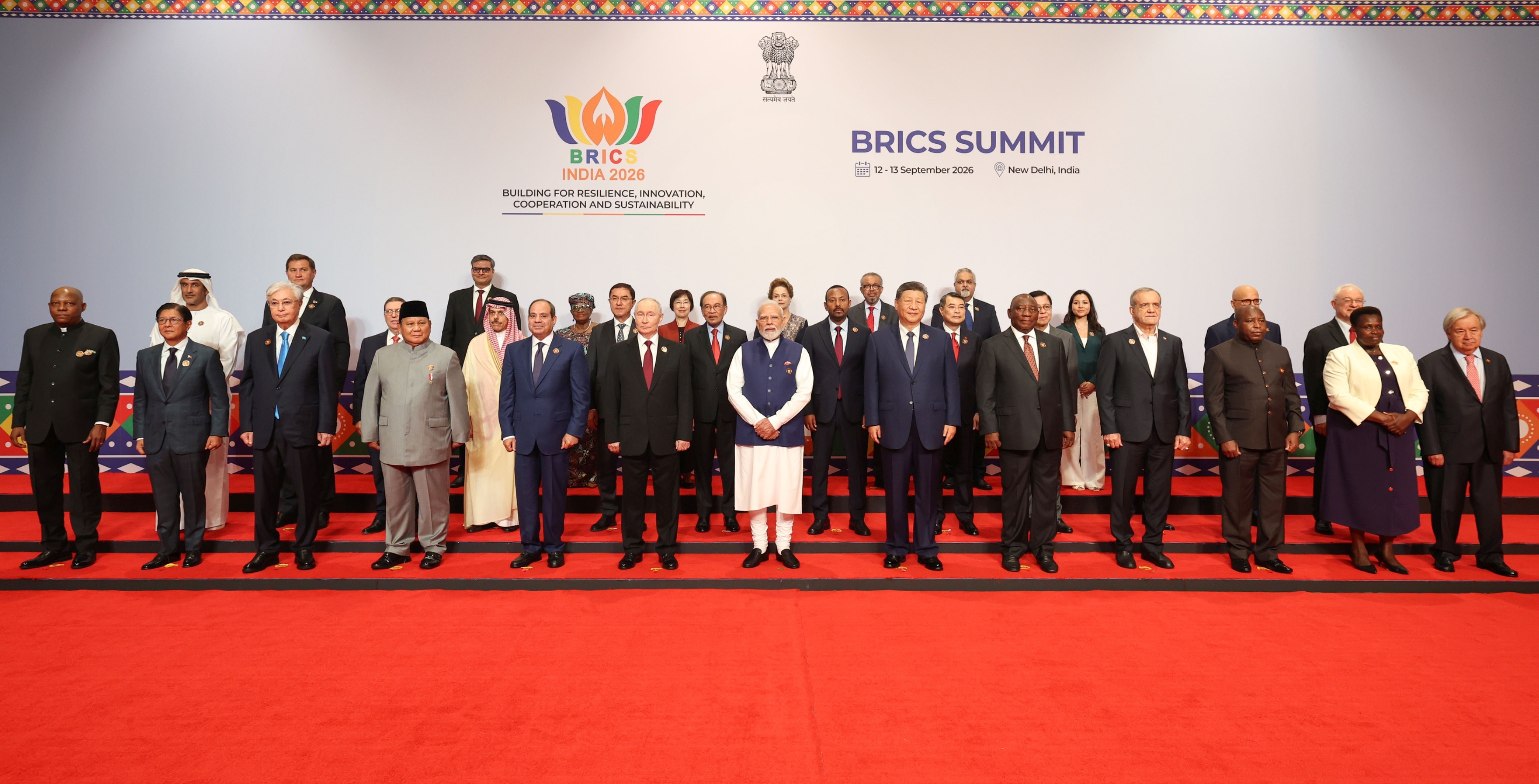
Hosted by India under the theme 'Building for Resilience, Innovation, Cooperation and Sustainability', the two-day summit brought together leaders of the 11-member BRICS grouping amid heightened geopolitical tensions, economic uncertainty and growing divisions over the wars in West Asia and Ukraine
 TDJ News Service
14 Sep, 2026
New Delhi: The 18th BRICS Summit in New Delhi ended with an ambitious call for a more representative and balanced global order, as leaders of the expanded grouping turned their attention to trade, conflicts, artificial intelligence, development finance and the growing role of the Global South.
Hosted by India under the theme 'Building for Resilience, Innovation, Cooperation and Sustainability', the two-day summit brought together leaders of the 11-member BRICS grouping amid heightened geopolitical tensions, economic uncertainty and growing divisions over the wars in West Asia and Ukraine. The leaders adopted the New Delhi Declaration, reaffirming their commitment to multilateralism, sovereign equality and greater representation for developing countries in global institutions.
For India, one of the central objectives was to position BRICS not merely as a platform for criticism of the existing international system but as a mechanism capable of producing practical solutions for developing economies. Prime Minister Narendra Modi called for the Global South to move from being “rule-takers” to “rule-shapers”, stressing that developing countries should have a greater voice in institutions that determine the rules of the international economic and political order.
Trade and protectionism
Economic issues occupied a prominent place in the discussions. BRICS leaders criticised unilateral trade measures, protectionism and tariff barriers, arguing that such policies disrupt global supply chains and hurt developing economies.
The declaration stopped short of naming the United States, reflecting the differing economic and political interests of the expanded grouping. Instead, it expressed opposition to unilateral tariffs and measures that undermine the principles of the multilateral trading system.
Rather than pursuing a common BRICS currency — an idea that has attracted considerable attention in recent years — the grouping focused on more practical measures, including greater use of national currencies in cross-border trade and improving the interoperability of payment systems. The BRICS Payment Task Force will continue examining ways to make cross-border payments faster, cheaper and more secure.
The New Development Bank was also encouraged to expand financing in local currencies and diversify its sources of funding. India’s proposal to establish a **BRICS Risk Lab at GIFT City in Gujarat** received support, while members agreed to work towards developing a new investment platform on a phased and consensus-based basis.
West Asia and Iran
The conflict in West Asia presented perhaps the most difficult diplomatic challenge for the summit.
BRICS leaders expressed deep concern over the continuing escalation of tensions and called for maximum restraint and diplomatic efforts to prevent further deterioration. The wording was carefully negotiated and avoided explicitly naming the United States, Israel, Iran or Gulf countries.
The cautious language reflected differences within the expanded grouping, particularly because Iran and the UAE are both part of BRICS while their regional interests do not always coincide. The eventual consensus was nevertheless significant, demonstrating that the grouping could produce a common position despite serious geopolitical differences.
The declaration also reiterated support for international law, the UN Charter and diplomatic approaches to conflicts, while stressing the need for a peaceful settlement of the Palestinian question.
Terrorism and security
Terrorism featured prominently in India's diplomatic priorities. The New Delhi Declaration strongly condemned terrorism in all its forms and manifestations and reaffirmed that there can be no justification for terrorist acts.
The declaration specifically referred to the Pahalgam terror attack, giving India an important diplomatic victory at a multilateral forum. BRICS leaders also stressed the importance of international cooperation against terrorism, including tackling its financing and preventing the use of technology and cyberspace for extremist purposes.
Artificial intelligence and technology
Artificial intelligence emerged as another major area of cooperation.
The leaders stressed that AI should contribute to inclusive development rather than deepen the technological divide between developed and developing countries. The summit backed greater cooperation on safe, inclusive and equitable access to AI and welcomed initiatives aimed at strengthening technological capabilities in the Global South.
China also proposed an AI Open Source Zone under a broader “Greater BRICS” framework, seeking to expand collaboration among member countries in artificial intelligence and related technologies.
India pushed several initiatives involving digital public infrastructure, industrial innovation and skills. A BRICS Training Hub Network and a Centre for BRICS Industrial Competencies were among the initiatives receiving support, alongside cooperation in areas such as digital infrastructure and Industry 4.0.
Climate, health and development
The summit also focused on sustainable development, energy transition, healthcare, agriculture, infrastructure and the empowerment of small businesses.
BRICS members highlighted the importance of helping developing economies cope with climate change while ensuring that energy transitions remain affordable and equitable. Cooperation in health, including mental wellness, was also placed on the agenda.
The grouping gave particular attention to micro, small and medium enterprises, recognising their importance in employment generation and economic growth. Greater integration of MSMEs into global supply chains was discussed as a way of ensuring that the benefits of international trade reach smaller producers and businesses.
Reforming global institutions
Underlying many of the discussions was a common demand for reform of global institutions, particularly the United Nations and international financial organisations.
BRICS leaders argued that the architecture of global governance must better reflect the economic and demographic weight of developing countries. Greater representation for the Global South in international decision-making was therefore presented as one of the central long-term objectives of the grouping.
The New Delhi summit thus sought to balance political differences among its members with practical cooperation. The expanded BRICS is far from a homogeneous bloc, with members holding divergent positions on major conflicts and maintaining different relationships with the United States and other powers.
Yet the summit demonstrated that there remains considerable common ground on trade, development, technology, reform of global institutions and the demand for a stronger voice for emerging economies.
For India, the summit provided an opportunity to showcase New Delhi's diplomatic reach while advancing its broader argument that the Global South should have a greater role in shaping the rules of the international system.
The challenge now will be to convert the declarations and initiatives into measurable outcomes. The New Delhi Summit has given BRICS an expanded agenda. Its credibility will increasingly depend on how effectively its members turn that agenda into cooperation on the ground.
(This article has been written with the help of AI)
Tags : BRICS, New Delhi, Global South, Trade, Narendra Modi