History
From white to iconic blue to saffron: Can jersey debate at 11th hour mar or inspire India's Hockey World Cup dream
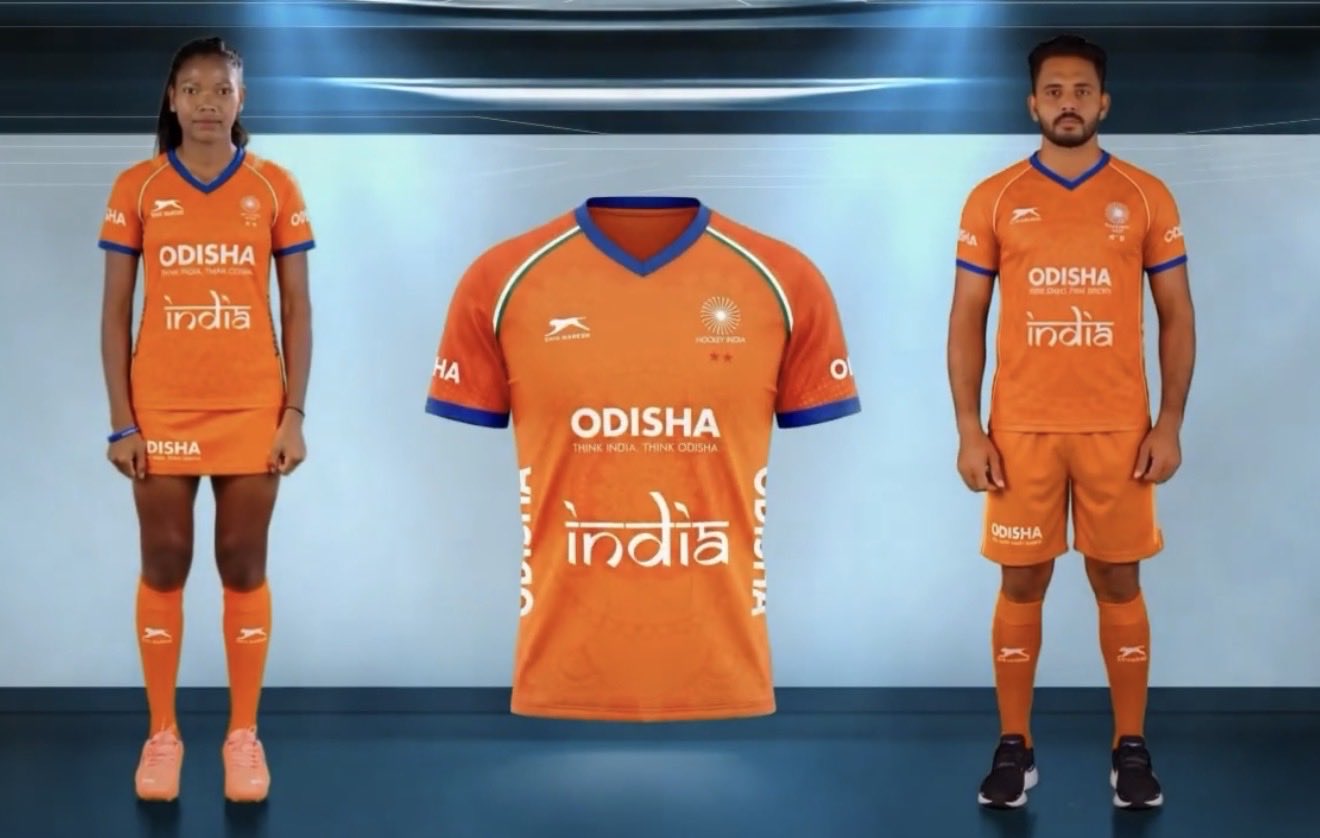
History at the Belfius Hockey Arena, Warve, Belgium in men's final on August 30 or Wegener Stadium, Amstelveen in women's final on August 29 would remember the champions and not the colour of their jerseys
 Avinash Singh
Prof Avinash Singh is a former Special Correspondent of Hindustan Times. A regular contributor to various publications on sports and political issues, he has been into academics for long having been a Professor, Dean, Director, DG and Pro-VC with various Govt and private universities. He is also COO - Communications with Nehru Hockey Tournament Society.
03 Aug, 2026
At a time when Indian men's and women's teams should be putting their acts together on various combinations, strategies and finalising moves for a podium finish at the FIH Hockey World Cups in Belgium and the Netherlands from August 15 to 30, in both the sections, an unusual controversy over jersey colours has overshadowed the preparations.
In the spotlight has been discussions on Indian squads taking the fields in 'saffron' discarding their traditional over two decades of 'iconic blue' attire.
From the resurgence under coach Graham Reid to the historic successive Olympic bronze medals at Tokyo and Paris, the 'Men in Blue' became a symbol of Indian hockey's revival. Yet, just weeks before the World Cup, Hockey India unveiled a saffron primary jersey for both the men and women teams, setting off an emotional and somewhat political debate.
Hockey India defended the move on both technical and symbolic grounds. Officials argued that modern international hockey is played on blue synthetic turfs and that a blue jersey can reduce visual contrast, making it marginally harder for players to identify teammates at speed. Saffron, they said, offers greater visibility while also representing courage and sacrifice as one of the colours of the Indian national flag.
This journalist had personal reasons to look forward to Wagener Stadium Amstelveen, Amsterdam where Indian men open their Group A campaign against Wales, England and Pakistan.
Though India tasted their maiden triumph at 1975 World Cup 51 years ago, Indian bandwagon to 1973 Amsterdam World Cup was the strongest team after bronze at 1968 and 1972 Olympics, to leave Indian shores.
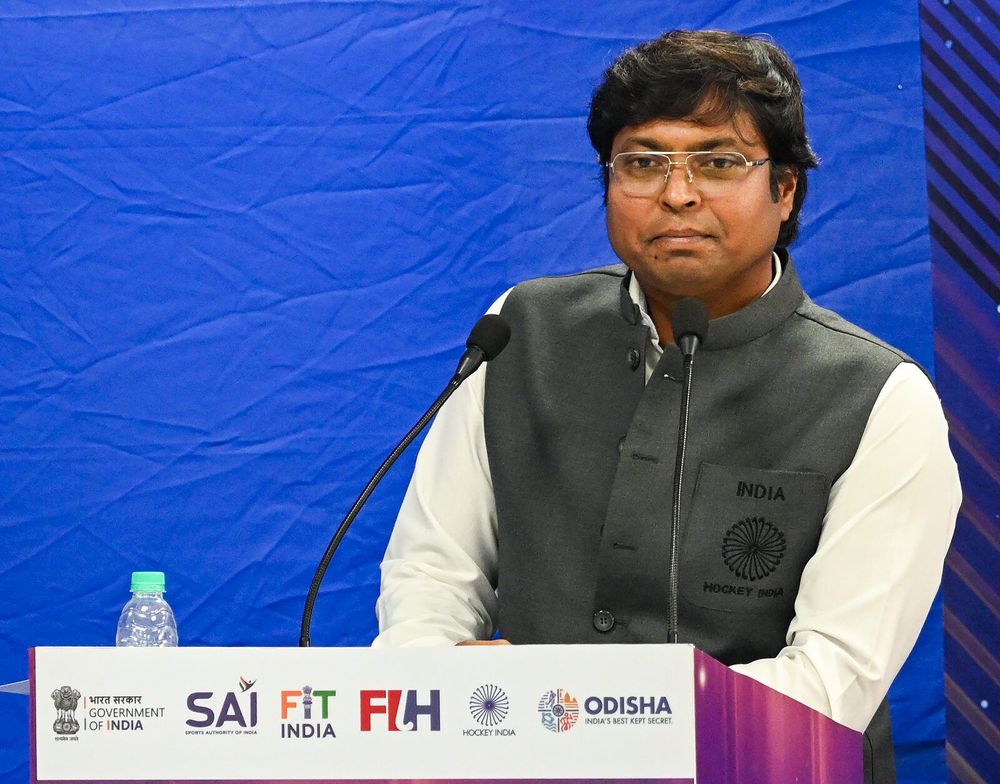
Dilip Tirkey was displeased with Hockey India for not consulting him
A handful would remember how, thanks to two penalty corner goals by defender Surjit Singh Randhawa, India was 2-0 up in first 12 minutes against hosts, the Netherlands, in the final. Though we lost the Cup battle in penalty shootout, we thought we had scores to settle this time, but for this saffron jersey fiasco. In the inaugural World Cup in Barcelona in 1971, India had finished with a bronze. We haven't not done well in any FIH World Cup after winning the 1975 tourney.
The visibility argument, on Hockey India's sudden shift to saffron has not convinced everyone!
Former India captain and Olympian Viren Rasquinha described the move as unfortunate, arguing that blue had become an integral part of Indian sporting identity. Junior team's coach and goalkeeping legend P.R. Sreejesh, while urging everyone to move on and focus on winning the Cup, questioned the visibility argument. If blue truly posed a disadvantage, he remarked, then teams should never wear blue again.
His appeal has a rationale behind it! He wants the players to not be distracted by an off-field issue when India has a realistic opportunity ahead.
Perhaps the most surprising remark came from Hockey India President Dr Dilip Tirkey, one of India's greatest defenders. Tirkey publicly stated that the decision had been taken without his prior knowledge and sought an explanation regarding the process adopted by the executive board of Hockey India. His comments transformed what might have remained a design debate into a governance issue, raising questions about consultation and transparency. He, however, retraced his steps either under pressure or in the interest of the team agreeing to the visibility issue on synthetic surface.
So did some players led by mercurial half-liner Hardik Singh.
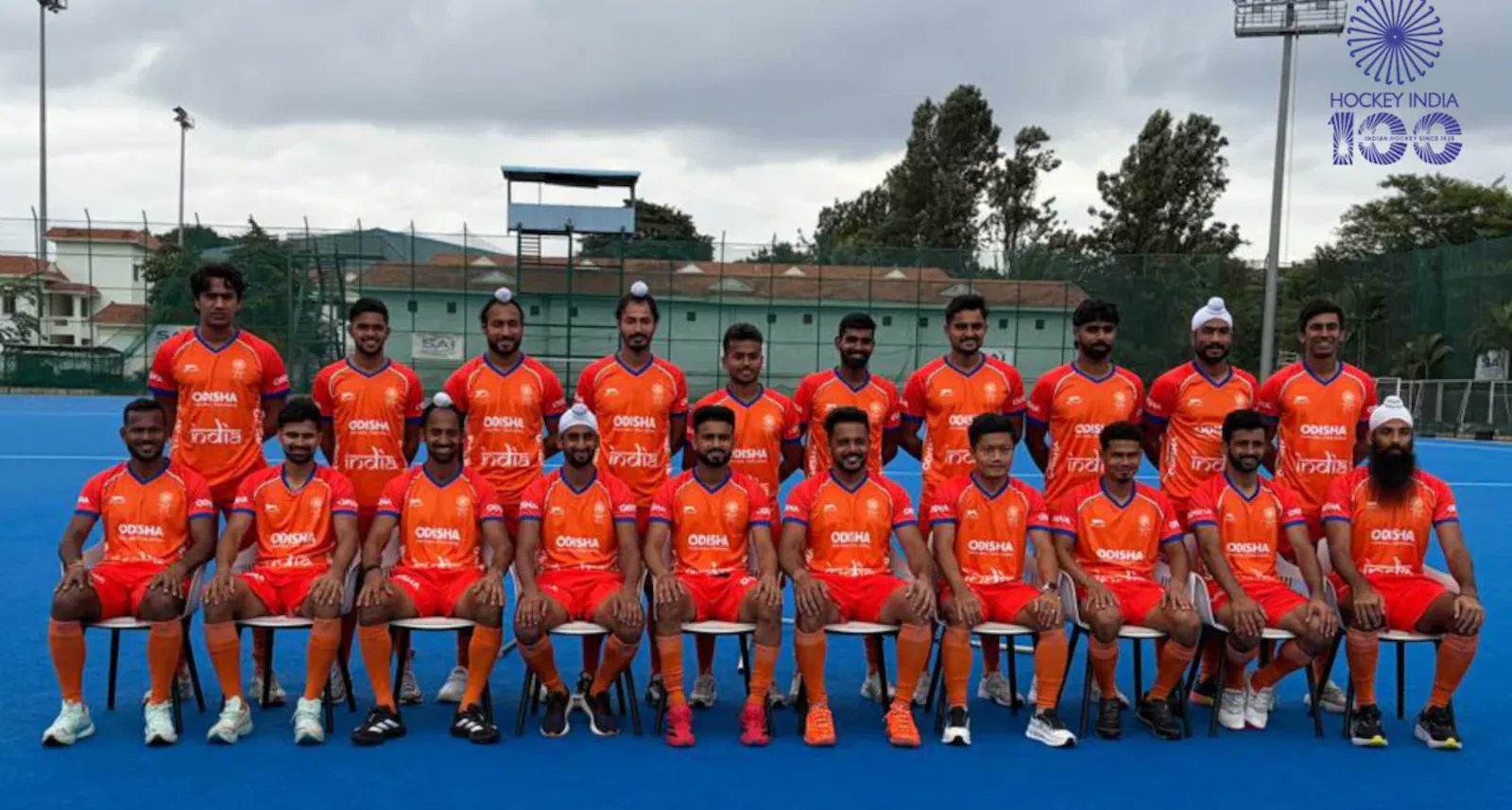
Supporters of the change point to evolving sports science, where colour contrast can aid split-second decision-making. Critics counter that no convincing evidence has yet shown that merely changing jersey colour translates into better results at top level.
History, in fact, offers an interesting reminder. During the 2014 Hockey World Cup, India abandoned blue in favour of a predominantly yellow jersey. The experiment did not produce the desired results, and the team subsequently returned to its traditional blue, complemented by orange accents on the socks, collar and sleeve bands. That blue jersey became associated with some of Indian hockey's finest modern achievements at last two Olympics, making the present shift a suspect move.
The manufacturer of the new kit is Shiv Naresh, one of India's oldest indigenous sportswear companies. Founded in New Delhi in 1987, the company became Hockey India's official apparel partner in 2013 and has supplied playing kits, training wear and travel apparel for the men's, women's and junior national teams ever since. Before Shiv Naresh, India's hockey teams wore apparel supplied by international brands like Adidas and Nike during different Olympic cycles and major tournaments.
Ironically, Shiv Naresh finds itself at the centre of a debate that it did not create. The company has simply executed the design approved by Hockey India, yet its jersey has become one of the most discussed pieces of sporting apparel in the country.
Let's remind our readers that Amsterdam was the venue where British Indian team had made a rousing start in 1928 Olympics under Jaipal Singh. Later Lal Shah Bhukhari and Dhyan Chand had continued the winning run. It may be recalled here that the predominant colour of Indian shirts was always white with 'India' badge on the pocket.
Between 1948 and 1964 Olympics, where India bagged four gold and a silver (losing first time to Pakistan in 1960 at Rome), blue of a different intensity had slowly started appearing on collar strip besides the pocket. Barring experiments with orange and white and yellow, post 2000, the colour remained blue.
Once the opening whistle blows in Netherlands and Belgium, colours will matter far less than execution. Let's believe in coach Craig Fulton's abilities in keeping his flock together.
Jersey controversy apart, the absence of already travelling Indian women team's Dutch coach Sjoerd Marijne, too has been criticised by many. Marijne from the Netherlands has been on leave since July 12 and would be joining the team on August 6. He missed the preparations at Bengaluru and the practice match against Germany a couple of days back.
The Indian men's team enters the World Cup as one of the confident contenders. Under coach Craig Fulton, India has developed into one of the most disciplined defensive units. Captain Harmanpreet Singh remains among the game's most lethal drag-flick specialists, while the midfield and forward lines possess the pace and experience to challenge traditional powers such as the Netherlands, Belgium, Germany and Australia.
If India converts penalty corners consistently and maintains defensive discipline, a place in the last four could be a realistic expectation, with the potential to go even further! Indian women too have hidden strength to make the knockout grade.
History at the Belfius Hockey area, Warve, Belgium in men's final on August 30 or Wegener Stadium, Amstelveen in women's final on August 29 would remember the champions and not the colour of their jerseys.
Tags : Hockey India, Saffron, Jersey, World Cup, Craig Fulton, Dilip Tirkey, Sjoerd Marijne