Books
Where art, love and landscape become one: The story behind 'A Song for Eresha'
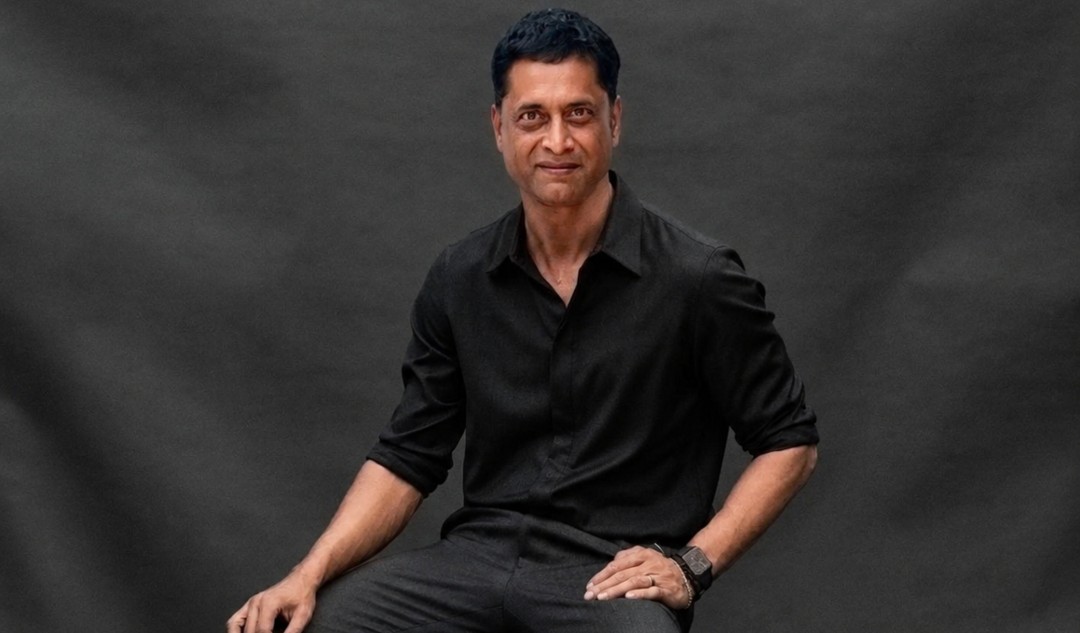
The author of A Song for Eresha on unspoken love, classical dance, the evocative landscapes of Azhagankarai, and the journey from childhood storytelling to bringing a deeply personal story to readers and the screen
 TDJ News Service
25 Aug, 2026
New Delhi: In an engaging conversation, AK Srikanth, the author of 'A Song for Eresha' delves into the ideas and experiences that shaped the novel, from the complexities of unspoken love and devotion to the world of classical dance and the evocative landscapes of Azhagankarai. The author also reflects on the journey from being a childhood storyteller to becoming a novelist, the interplay between art and personal emotions, the importance of setting in storytelling, and the response to both the novel and its screen adaptation.
Q. Tell us about the inspiration behind your novel.
A. People often assume the novel began with dance, but it actually began with a question. I found myself wondering what happens when someone experiences an overwhelming emotional attachment that can never be expressed, never be acted upon, and perhaps never even be acknowledged. That question stayed with me for a long time before I knew who the characters were.
The world of classical dance came naturally because I've spent many years writing and directing dance theatre productions. I've seen rehearsals from the inside, watched productions take shape over months, and observed the extraordinary discipline that artists bring to their work. I wasn't interested in writing about dance itself. I was interested in the people who devote their lives to it, and the emotional lives that exist beneath all that grace and precision.
The setting arrived much later. A visit to the mangroves and backwaters around Muthupet (in Tamil Nadu) convinced me that this was where the story belonged. There is something about that landscape that slows time down. It has an extraordinary sense of stillness, but it's never static. The tides are always changing, and that felt like the emotional rhythm of the novel as well.
By the time I sat down to write, I wasn't trying to tell a love story in the conventional sense. I wanted to write about devotion in all its forms: to art, to an institution, to another human being, and to the ideals we build our lives around. Everything else grew from there.
Q. What inspired you to become a writer?
A. I think I became a storyteller long before I became a writer. I wrote my first story when I was still in single digits. It was a series called 'The Adventures of Captain John'. Looking back, it was probably just an enthusiastic child's imitation of the adventure stories I loved, but I suppose that's where it all began.
I grew up in a family of voracious readers. Books were a constant presence in our home. My parents and grandparents read constantly, and I naturally grew up doing the same. I was introduced very early to editions of an astonishing range of writers and genres, from Dickens, the Brontë sisters, Dumas and Rafael Sabatini to more modern writers such as Arthur Hailey, Alistair MacLean and Frederick Forsyth. I appreciated that exposure even then. It opened up worlds I would never otherwise have encountered and taught me that there were countless ways in which a story could be told.
As a child, I also had a strange habit. Whenever I heard a story or watched a film, I would rewrite it. Sometimes I would change the ending, sometimes the characters, and sometimes the entire plot. I was constantly asking myself, "What if it happened this way instead?" Looking back, I think that was the beginning of my journey as a writer.
Writing novels came much later, after years of writing for the stage and directing films. But the impulse has never really changed. I've always been fascinated by stories and by the endless possibilities they offer for understanding people and the world around us.
Q. About the novel: You talk about the Eresha falling in love with Anvesha. The boundary of art and personal feelings getting blurred. Explain
A. I don't think the boundaries between art and personal feelings become blurred so much as they slowly reveal themselves. Eresha chooses to stage the story of Urvashi and Arjuna before she has any conscious understanding of her own feelings. At that point, it is simply a story she wants to tell. Only later does she begin to realise that the mythology she has chosen bears an uncanny resemblance to the emotional journey she herself is undertaking.
The production is about a figure of almost mythical stature falling in love with a human being. As rehearsals progress, Eresha gradually recognises that she has come to love Anvesha in much the same way. What makes the parallel especially poignant is that, like the myth, her feelings are entirely her own. Anvesha's admiration for Eresha is that of a devoted student for her teacher. There is never any suggestion that those feelings are reciprocated.
That, for me, is where art becomes so fascinating. We sometimes choose a story without fully understanding why it speaks to us. It is only in the act of creating it that we discover it has been reflecting something deeply personal all along. In Eresha's case, the dance production doesn't give rise to her emotions. It helps her recognise them.
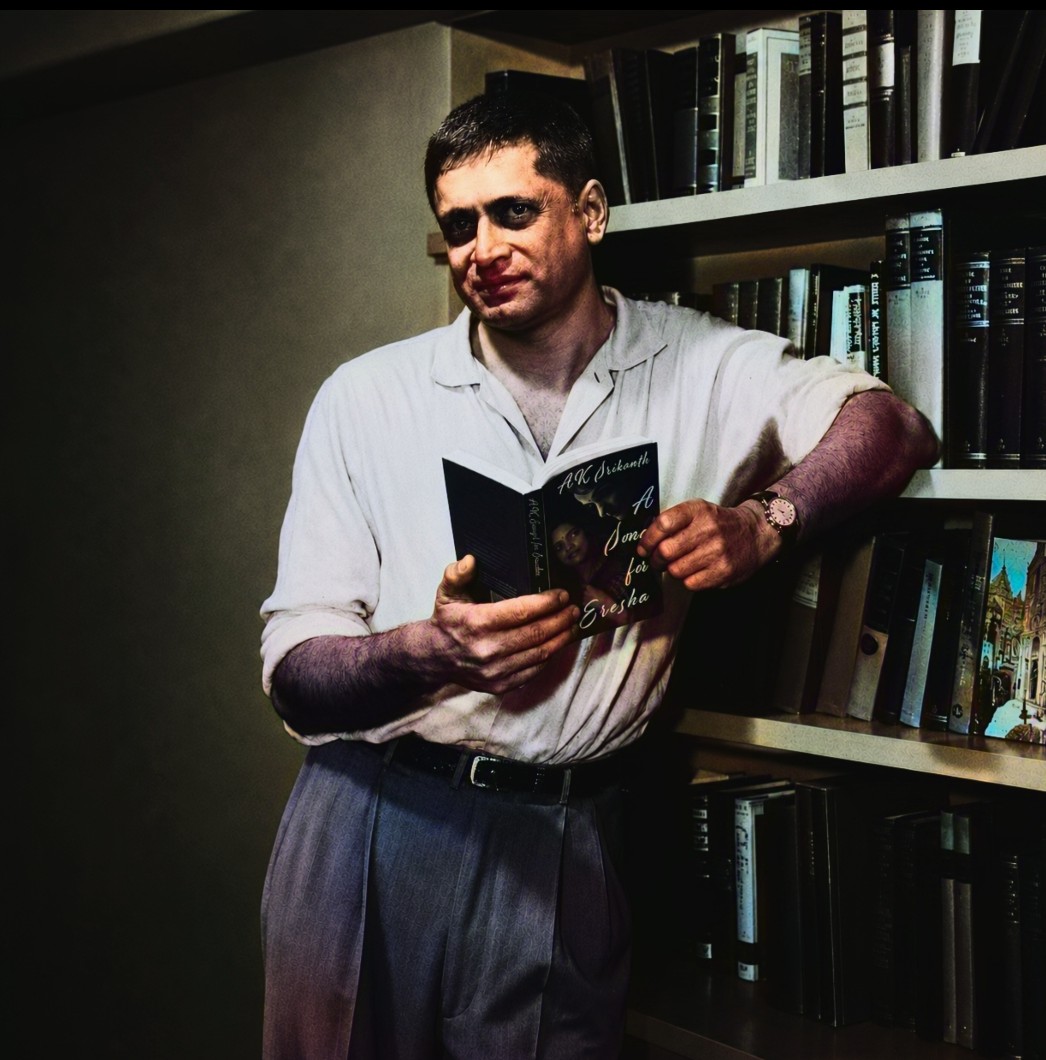
Award-winning filmmaker AK Srikanth has written his debut literary novel, A Song for Eresha
Q. You have also used plenty of natural imagery which, in the writing of this day and age, is often overwhelmed by the city's glitz ?
A. London and its smog-filled streets are inseparable from Sherlock Holmes. The Yorkshire moors are as important to Wuthering Heights as any of its characters. Places have always been central to storytelling because they shape the people who inhabit them.
I've never thought of landscape as something that simply frames a story. A Song for Eresha could only have happened in Azhagankarai. It's a place of backwaters, mangroves and changing tides. Life isn't hurried. People move with the rhythm of the water, and nature is part of everyday life. That felt right for a novel about observation, devotion and the slow recognition of one's own emotions.
The descriptions of the landscape came naturally because they belong to that world. If the characters travel by boat or walk through the mangroves, that's simply how life in Azhagankarai is lived. As the novel grew, I found that the seasons, the tides and the landscape carried the same emotional weight as the characters. They became part of the story rather than its background.
If another story demanded the pace, energy and glitter of a city, I would happily set it there. The setting should always grow out of the story it is telling.
Q. How has the response been?
A. I'm very happy with the response. The novel has found readers in many parts of the world, and what has been especially gratifying is the range of people it seems to have connected with. Some readers came to it because of their interest in classical dance, while others discovered it simply as a work of literary fiction.
The film has also found its audience. It has now spent over a hundred days on Prime Video and Apple TV across the UK, the US and several other countries, and it will be reaching audiences in India very soon. It's been wonderful to see people engage with the same story in two completely different forms.
What has pleased me most is what readers and viewers remember. They talk about Eresha and Anvesha, the landscapes of Azhagankarai, and the emotional choices the characters make. When people carry the place with them as much as the people who inhabit it, I feel I've succeeded in creating a world rather than simply telling a story.
The critical response has also been deeply encouraging. Reviewers have responded to the novel's restraint and its willingness to trust the reader. Those were conscious choices while writing the book, so it's immensely satisfying to see them recognised.
Tags : A song for Eresha, AK Srikanth, Sherlock Holmes, novel, storyteller