Delhi
Union Budget 2026 delivers infrastructure, policing and metro boost for Delhi: Minister Sood
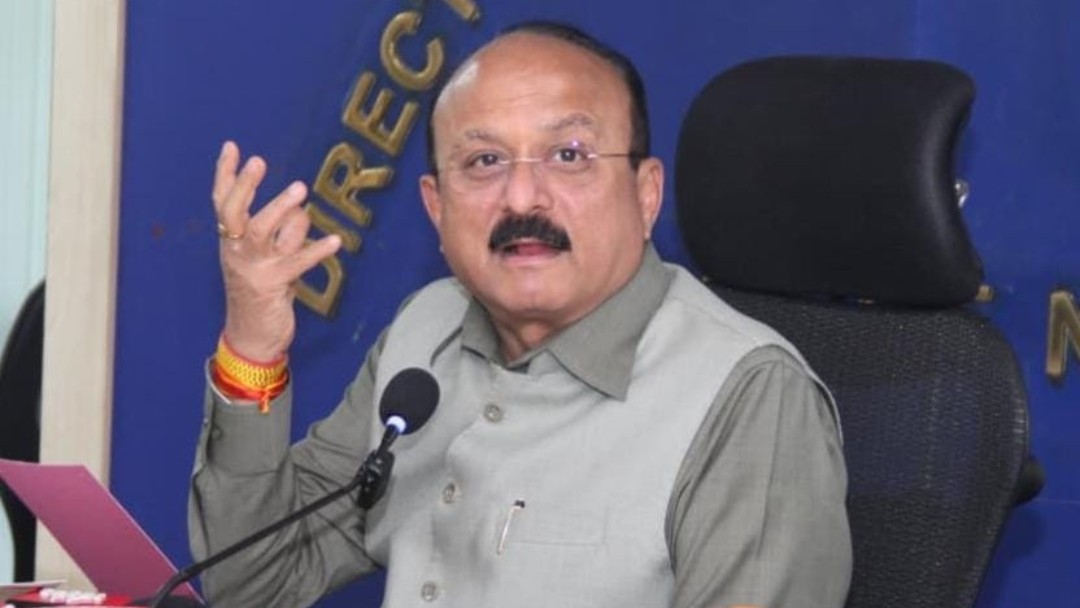
Delhi Education Minister Ashish Sood said the Union Budget 2026 provides significant benefits for the capital, including Rs 12,846 crore for police modernisation, major Metro Phase-IV funding, and Rs 21,000 crore public borrowing permission. He described the Budget as a decisive step toward 'Viksit Bharat@2047'
 TDJ News Service
06 Feb, 2026
New Delhi: Highlighting major gains for the national capital, Delhi’s Minister for Education Ashish Sood on Friday said the Union Budget 2026 delivers substantial financial, infrastructure and governance benefits for Delhi, while also advancing the broader vision of Viksit Bharat@2047.
Addressing a press conference at the Delhi Secretariat, Sood said the Budget has allocated Rs 12,846 crore for strengthening the Delhi Police, including AI-based smart traffic management, facial recognition systems, city-wide CCTV coverage and modern communication infrastructure.
He added that Delhi has received Rs 1,348 crore directly, and for the first time, has been permitted public borrowing of up to ₹21,000 crore, a move he termed historic for accelerating infrastructure development.
Sood further highlighted enhanced funding for Delhi Metro Phase-IV and the SASCI scheme, which has risen from Rs 6,275 crore to Rs 15,380 crore through 50-year interest-free loans. Three major corridors—Lajpat Nagar to Saket (8.38 km), Inderlok to Indraprastha (12.37 km) and Rithala to Kundli (26.47 km)—will be developed to strengthen public transport and address pollution concerns.
Under PM Awas Yojana (Urban) 2.0, Rs 18,625 crore has been allocated, while the PM SVANidhi scheme for street vendors has seen a 57% increase to Rs 900 crore. Urban development has received Rs 85,522 crore nationally, part of an overall Rs 53.5 lakh crore investment in urban development and the power sector, which Sood said will significantly benefit metropolitan cities like Delhi.
He also pointed to plans for five university townships near industrial and logistics corridors, noting that the Delhi government has already acquired 160 acres for the Narela Education City, envisioned as a major education and logistics hub. For women-led development, ₹5.01 lakh crore—9.37% of the total Budget—has been earmarked.
Placing these provisions in a larger context, Sood described the Union Budget 2026 as a decisive step towards building a strong and sustainable foundation for 'Viksit Bharat@2047', both economically and ideologically. He said the Budget reflects India’s complete break from colonial-era thinking, noting key reforms such as the change in Budget presentation timing, advancing the presentation date to February 1, and this year’s preparation of the Budget at Kartavya Bhawan instead of Rajpath.
Sood credited former Prime Minister Atal Bihari Vajpayee for ending colonial budgetary practices and Prime Minister Narendra Modi for removing administrative inertia and reinforcing the values of “New India”. Referring to the Prime Minister’s remarks in the Rajya Sabha, he said the opposition was exposed for criticising the Budget while remaining silent on controversies linked to the previous Delhi government.
He added that despite global economic challenges such as wars, trade tensions and supply chain disruptions, India has turned crises into opportunities, citing the India–EU Free Trade Agreement as proof of the country’s growing economic strength and global credibility.
Tags : Ashish Sood, Delhi, Minister of Education, Union Budget 2026, Narendra Modi