International
Bangladesh cricket set to lose millions due to non-participation in T20 World Cup
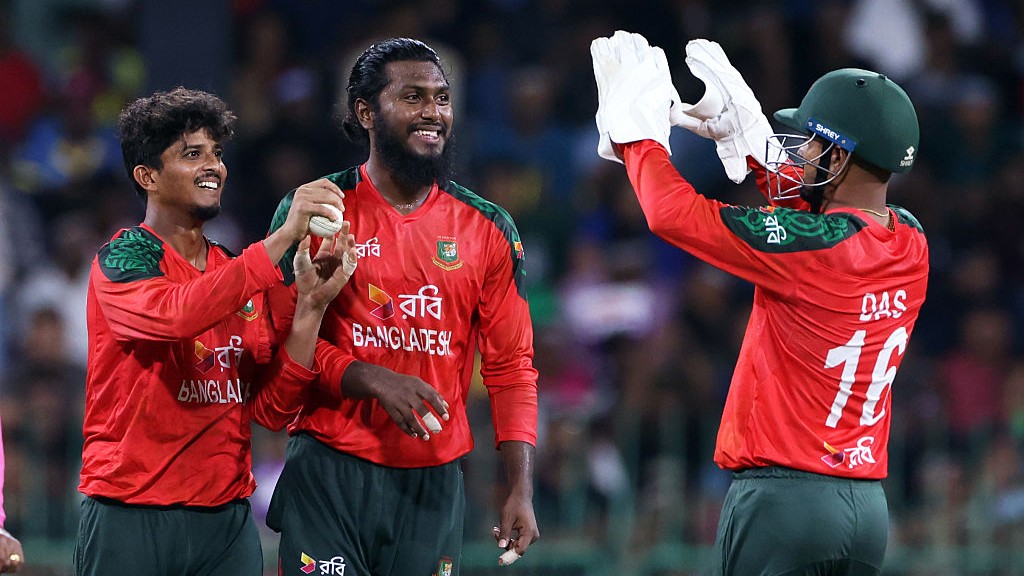
Since refusing to play in India would violate ICC participation terms, Bangladesh risk losing not only World Cup-related earnings but also a significant portion of their future ICC revenue share
 TDJ News Service
23 Jan, 2026
New Delhi: Bangladesh cricket is facing severe financial repercussions and the risk of failing to qualify directly for the next T20 World Cup after the country’s final decision not to play the tournament in India. If Bangladesh do not participate in this year’s T20 World Cup to be held from February 7 to March 8, they could lose tens of millions of dollars in revenue, see their ICC income sharply reduced, face possible fines, and be forced into a qualification round for the next World Cup instead of securing automatic entry.
Despite repeated discussions, Bangladesh have not changed their position. It is now final that if the matches are not moved from India — the co-host country of the T20 World Cup — Bangladesh will not participate due to security concerns. The BCB have taken the decision after the Kolkata Knight Riders removed Mustafizur Rahman from their Indian Premier League squad following criticism from Indian public.
Youth and Sports Advisor Asif Nazrul confirmed this following a meeting with the World Cup squad at Hotel InterContinental on Thursday, stating, “There is no possibility of our decision changing.”
This stance remains unchanged even after the ICC announced that the venues would not be altered. As a result, Bangladesh’s absence from the T20 World Cup appears inevitable, triggering serious concerns about financial losses and long-term consequences for Bangladesh cricket.
The Bangladesh Cricket Board (BCB) earns revenue from ticket sales, broadcasting rights, advertising, and sponsorships related to national team matches. However, its primary source of income is the International Cricket Council (ICC). According to BCB president Aminul Islam, around 55 to 60 percent of the board’s annual income comes from the ICC.
Participating nations receive a guaranteed share of ICC revenue for global tournaments across all three formats, along with additional earnings based on performance at different stages. If Bangladesh does not participate in the T20 World Cup, it will receive none of this money.
Bangladesh could lose approximately $30 million (around 367 crore Bangladeshi taka or 275 crore Indian rupees) by missing the T20 World Cup. This figure represents Bangladesh’s share of the ICC’s annual revenue —about 4.46 percent — which is tied to participation in ICC events.
Since refusing to play in India would violate ICC participation terms, Bangladesh risk losing not only World Cup-related earnings but also a significant portion of their future ICC revenue share. As these issues are interconnected, the overall financial damage could be long-lasting.
In addition, Bangladesh cricket would suffer major losses from broadcasting rights and sponsorship deals, meaning the BCB could lose close to 60% of their annual income due to this single decision.
Each team in the T20 World Cup is set to receive $300,000 (around 36.6 million taka or 2.75 crore rupees) simply for participating. Beyond that, teams earn prize money for match wins and progression through the tournament. By staying away, Bangladesh will forfeit all of these earnings, and players will also lose match fees, performance bonuses, and prize money.
The ICC has reportedly increased prize money for this year’s T20 World Cup by 20% compared to the 2024 edition. Teams will earn $31,154 for each match won in the group stage and Super Eight. Teams finishing fifth to twelfth will receive $450,000, losing semi-finalists $960,000, the runner-up $1.6 million, and the champion $3 million. Bangladesh will miss out on all of these potential earnings.
Media reports also suggest that if Bangladesh fail to provide a valid justification to the ICC for non-participation, the BCB could be fined approximately $2 million (about 244.6 million taka or 18.3 crore rupees).
There are also bilateral consequences. Bangladesh are scheduled to host India in September for three ODIs and three T20s. If India refuse to tour Bangladesh due to strained relations, the BCB will lose a major revenue opportunity, as series against India generate the highest broadcasting and sponsorship income. Compared to playing any other country, matches against India bring significantly greater financial benefits.
Under the ICC’s current revenue-sharing model, the BCB is expected to receive 327 crore taka annually during the 2024–2027 cycle. However, non-participation in the T20 World Cup could lead the ICC to reduce Bangladesh’s allocation in the next revenue cycle starting in 2028. Bangladesh’s representatives could also lose positions on ICC committees, and their voting rights may be curtailed.
Beyond finances, the cricketing impact is also serious. By not playing in this T20 World Cup, Bangladesh risks losing automatic qualification for the next edition and may be forced to compete in a qualifying tournament just to reach the main event.
Tags : Bangladesh cricket, ICC, T20 World Cup, Asif Nazrul