International
India's batting, bowling flop as New Zealand win second ODI
On a batting-friendly surface on Wednesday, India were invited to bat. The hosts managed a respectable 284/7 in their allotted 50 overs, but the total fell short of what might have been a match-winning score on a pitch that eased out under lights after a somewhat two-paced start
 TDJ News Service
15 Jan, 2026
Rajkot: New Zealand defeated India by seven wickets in the second ODI here at the Niranjan Shah Stadium. The win helped them level the 3-match series 1-1 after the first two matches.
On a batting-friendly surface on Wednesday, India were invited to bat. The hosts managed a respectable 284/7 in their allotted 50 overs, but the total fell short of what might have been a match-winning score on a pitch that eased out under lights after a somewhat two-paced start.
India got off to a positive start, with Rohit Sharma and Shubman Gill combining for a 70-run opening stand. However, Rohit departed fairly early for 24, and while Gill looked in good rhythm, he fell for 56, leaving India at 99/2 and disrupting the momentum.
The next phase of India’s innings, especially the middle overs (15–35), was crucial. Though India had multiple recognised batsmen at the crease, they struggled to accelerate consistently. After losing two early wickets, the scoring rate dipped around the middle overs as partnerships weren’t always incisive or aggressive enough. The bowlers tightened the lines, and India failed to push the score beyond the 300-plus mark that might have put pressure back on the Black Caps. Despite KL Rahul’s unbeaten century, India never really dominated this phase with the bat.
Rahul was undoubtedly the standout with the bat, finishing 112 off 92 balls and anchoring the Indian innings. His composed approach helped India reach a defendable score, but his innings — while technically sound — lacked the stroke-making aggression in the mid-overs that could have lifted India past the 325 run mark that often proves decisive in modern 50-over cricket.
In essence, India’s inability to significantly accelerate in the middle overs and convert good starts into a total closer to 330+ runs left some scope for New Zealand. While the scoreboard read a seemingly competitive 284, the lack of sustained aggression in the heart of the innings proved costly.
Chasing 285 for victory, New Zealand lost two early wickets to India’s new ball attack, reducing them to 46/2. This was arguably India’s best chance to build pressure. However, once Daryl Mitchell walked in, he began to take control of the chase with a blend of calm rotation of strike and measured aggression.
Mitchell and Will Young then constructed a massive 162-run partnership for the third wicket, effectively shifting the pressure back onto the Indian bowlers. Young’s support (87) was vital, but it was Mitchell’s ability to anchor the chase that proved decisive.
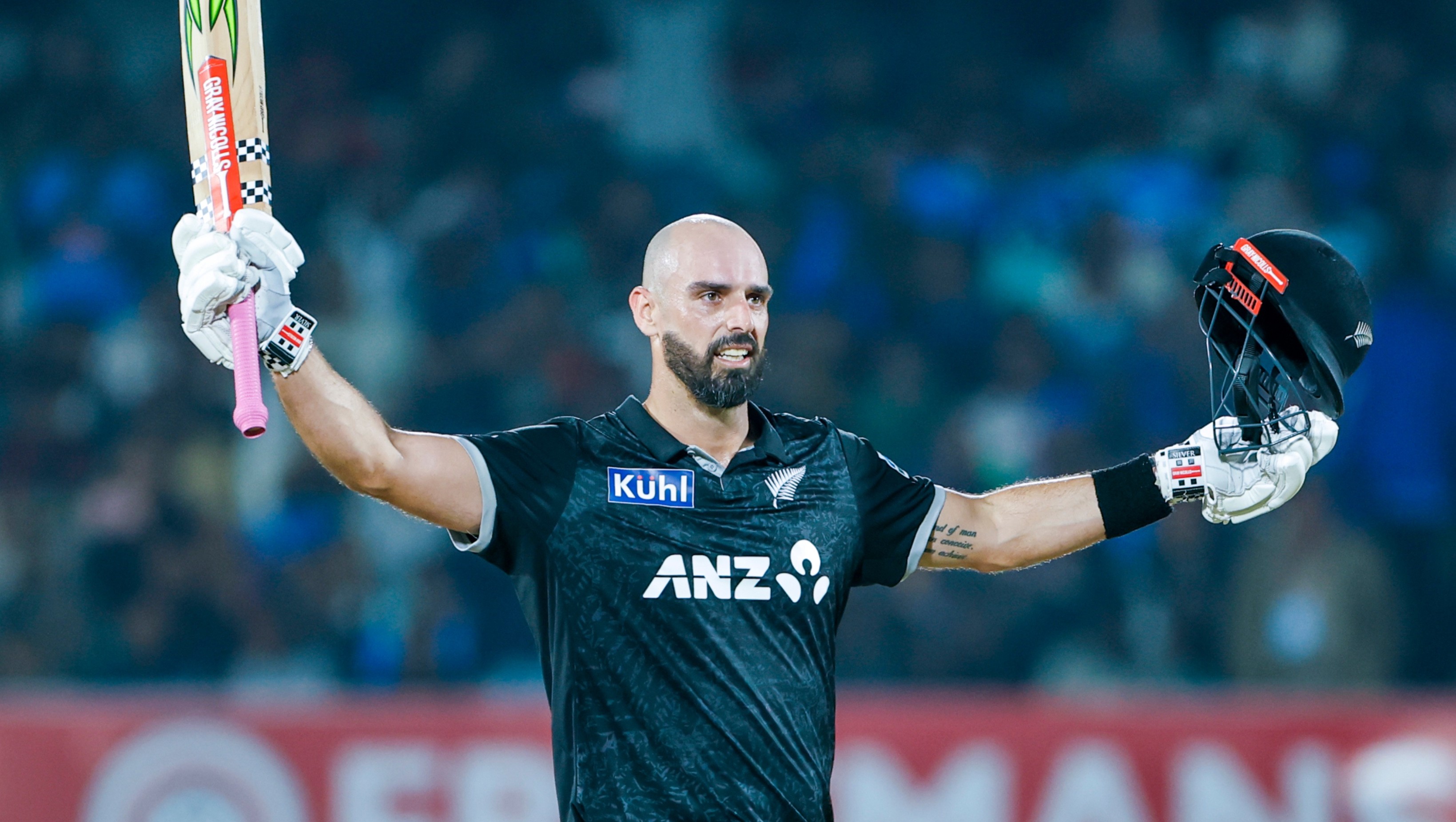
Mitchell finished on 131 not out off 117 balls, guiding New Zealand home with 15 balls to spare and securing a seven-wicket win that leveled the three-match series at 1-1. His knock was not only technically superb but tactically astute, hitting boundaries under control and punishing loose deliveries — especially against the spinners once the ball lost its early swing.
What made Mitchell particularly challenging for India in this match was not just his temperament, but his proven track record against Indian bowling attacks in ODIs. Mitchell has repeatedly performed well against India; he now has multiple high-impact scores, including centuries in this series and during the 2023 ODI World Cup, where he scored a big century in the semifinal chase of 397 runs. His ability to adapt to different conditions and score heavily off both pace and spin makes him a persistent threat.
Mitchell has a strong average and strike rate in matches against India, with three centuries and multiple 50-plus scores — indicators of why Indian bowlers have struggled to dismiss him at crucial stages.
India’s bowlers did find early success, including dismissing key New Zealand top-order batsmen. But once Mitchell and Young settled, India struggled to make further inroads. The lack of wickets in the middle overs of the chase allowed the partnership to flourish and eventually dismantle India’s defensive plan.
Captain Shubman Gill acknowledged that India’s bowling unit could not consistently strike in the middle overs, which turned out to be the decisive phase of the match. Without regular breakthroughs, the chase never felt truly threatened.
While India posted what looked like a defendable total on paper, the inability to push beyond 325 runs and the lack of aggressive batting during key middle overs left New Zealand with a manageable target. The chase was anchored masterfully by Daryl Mitchell, whose continued success against India in ODIs underscores the challenges India’s bowling attack faces in dismissing him consistently. His unbeaten century, combined with a crucial partnership for the third wicket, ultimately swung the match in New Zealand’s favour, setting up a thrilling series decider in the final ODI.
Tags : Niranjan Shah Stadium, New Zealand, India, Rohit Sharma, Shubman Gill