Nation
Why Aravalli Mountains are important to us
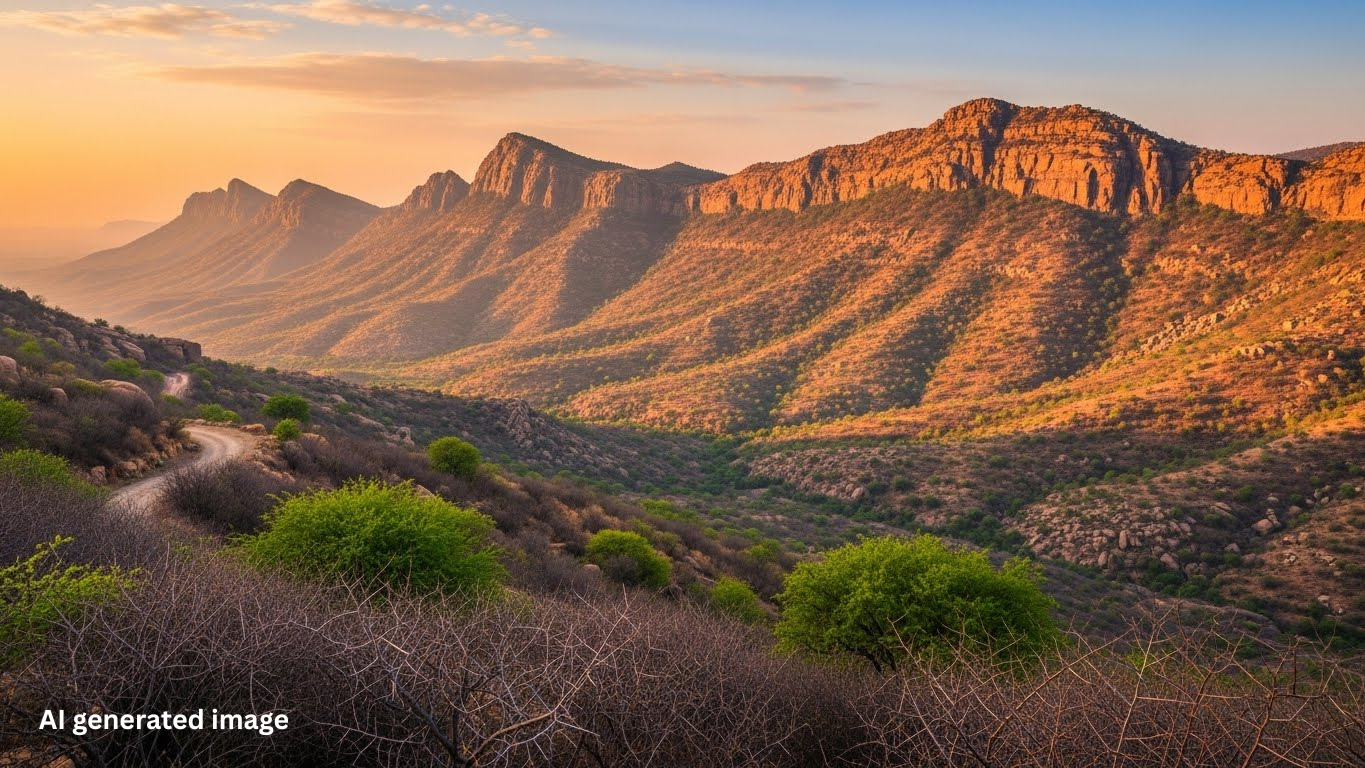
Historically, the hills nurtured river systems including tributaries of the Banas, Luni, Sahibi and Sabarmati, which have supported human settlement, agriculture and livestock for centuries
 TDJ News Service
12 Jan, 2026
New Delhi: Stretching approximately 692 km across four states — Gujarat, Rajasthan, Haryana, and the National Capital Region (including Delhi) — the Aravalli Range is one of the oldest mountain systems on Earth. Formed over two billion years ago, these ancient hills have played a central role in shaping the climate, hydrology, ecology and livelihoods of vast swathes of north-western India. Today, however, the range is facing what many scientists, activists, and environmental experts describe as an unprecedented crisis — not merely from mining and urbanisation, but from a legal redefinition that could strip protection from tens of thousands of ecologically vital hillocks and ridges.
The Aravallis are far older than the Himalayas, predating even many of the world’s well-known mountain systems. Over geological epochs, they have weathered erosion and tectonic shifts, leaving a landscape that today comprises ridges, hillocks, valleys and plateaus. Unlike young fold mountains (like the Himalayas), the Aravallis are worn down and modest in height, averaging much less than many mountain ranges elsewhere — but their age and geological continuity are what make them unique and ecologically significant.
Historically, the hills nurtured river systems including tributaries of the Banas, Luni, Sahibi and Sabarmati, which have supported human settlement, agriculture and livestock for centuries. Their weathered rocks and soil formations help capture rainwater, allowing it to percolate deep underground — a natural mechanism for recharging aquifers.
ECOLOGICAL ROLE OF THE ARAVALLIS
Groundwater recharge and water security: The dry and semi-arid regions of Rajasthan, Haryana and western Uttar Pradesh depend heavily on groundwater. The porous and fractured rock formations of the Aravallis act like a giant natural sponge, absorbing rainwater during monsoons and slowly releasing it into underground aquifers. In parts of the region, these recharge zones have historically mitigated water scarcity and equitably distributed water resources.
However, decades of deforestation, quarrying, and deep mining have disrupted this delicate hydrological balance. In some areas, mining has breached underground water channels, lowering water tables dramatically. Abandoned quarries become stagnant ponds or artificially deep excavations, altering natural water flow and increasing the risk of contamination.
For regions like Delhi-NCR, already stressed by rapid urbanisation and industrial demand, the Aravalli recharge zones are critical. Without them, borewell depths increase, supply becomes intermittent, and dependence on costly water transport (via tankers) rises — placing financial and physical burdens on households.
Climate moderation and pollution buffering: The Aravallis act as a natural climatic buffer for northern India. The hills slow down hot, dusty winds from the Thar Desert, reducing the intensity of dust storms and limiting the amount of coarse particulate matter entering the Indo-Gangetic plains — especially the air around Delhi and its surrounding urban sprawl.
This role is extremely important for Delhi, a city that frequently battles high levels of air pollution, where fine particulate matter (PM2.5) often reaches hazardous levels. Vegetation in the Aravallis — trees, shrubs and grasses — captures a portion of airborne dust and pollutants, lowering baseline pollution levels from which acute pollution episodes can surge.
Furthermore, landscapes with intact tree cover tend to experience lower surface temperatures. The presence of vegetation reduces the urban heat island effect — a phenomenon where built environments trap heat — thus contributing to more liveable local climates.
Biodiversity and ecosystem services: Although the Aravallis lie in predominantly dry regions, they support diverse ecosystems including dry deciduous forests, scrublands, and grasslands. These habitats are home to a wide range of flora and fauna — from medicinal plants to large mammals like leopards, nilgai, wolves and jackals. The range includes several protected areas and wildlife sanctuaries, such as Ranthambore, Sariska and Mukundra tiger reserves.
Ecological connectivity provided by the Aravalli ridges allows wildlife to migrate and breed across fragmented landscapes. Loss of these corridors due to mining and construction fragments habitats, increases human-wildlife conflict, and undermines long-term species survival.
HUMAN IMPACTS
The degradation of the Aravallis is not merely an environmental concern; it is a human crisis with direct effects on health, economic stability, and social well-being.
Air Quality and Public Health: As the natural dust barrier weakens, coarse sand and fine dust travel more freely into inhabited plains and urban centres like Delhi-NCR. Increased particulate matter leads to respiratory and cardiovascular illnesses, disproportionately affecting vulnerable populations — children, the elderly, outdoor workers and people with pre-existing health conditions.
India already faces one of the highest burdens of air pollution-related ailments globally, and any loss of natural filtering systems exacerbates this public health crisis.
Water stress and economic hardship: With groundwater levels dropping — in some areas by more than 60% over the past two decades — villagers and urban dwellers alike find themselves digging deeper borewells or paying for transported water. This increases household expenses, reduces agricultural productivity, and can lead to crop failures, threatening food security and rural livelihoods.
Indirect costs also emerge through reduced tourism in natural areas, lost opportunities for sustainable forestry, and declines in local agricultural markets dependent on stable water supplies.
THE CURRENT CONTROVERSY: REDEFINITION AND RISK OF 'CUTTING OFF' THE ARAVALLIS
In late 2025, the Supreme Court of India accepted a new criterion — proposed by the central government — that only landforms rising more than 100 metres above the surrounding terrain will be legally recognised as part of the Aravalli Range.
Critics argue that this definition is not a neutral scientific standard but a policy loophole that could strip legal protection from up to 90% of the range’s hillocks and ridges — many of which are well under 100 metres but ecologically indispensable.
These “low-height” formations serve exactly the functions listed above — buffering dust, recharging groundwater, and slowing desertification. Once they are no longer legally recognised, mining companies, real-estate developers and infrastructure projects could exploit them with fewer environmental safeguards.
This legal shift has sparked public outcry and environmental campaigns (e.g., “Save Aravalli”), rallies and criticism from scientists, activists, students’ groups and political leaders. Opponents argue that it is not only counter-productive to environmental protection but could precipitate long-term ecological collapse in northern India.
HOW CUTTING ARAVALLIS CAN HARM PEOPLE LIVING IN DELHI AND NORTHERN INDIA
Accelerated desertification and dust storms: Without the protective ridges, the Thar Desert’s eastward advance could accelerate, carrying wind-blown sand and dust across the plains. This would mean more frequent and intense dust storms in places like Delhi, Haryana and western Uttar Pradesh, degrading air quality further and increasing health costs.
Worsening water crisis: Reduced recharge surfaces mean lower water tables and more erratic water supplies. Delhi-NCR already deals with seasonal water shortages; loss of the Aravallis’ regenerative capacity would intensify competition for water between households, farms and industries.
Heat extremes and local climate disruption: Cutting tree cover and hills removes a key natural moderator of heat. Regions near degraded or deforested slopes become hotter, especially in summer, and cities already struggle with urban heat island effects. Without the cooling influence of vegetation and hills, heat waves worsen, increasing mortality and energy demand for cooling.
Loss of biodiversity and ecological collapse: Fragmented landscapes and habitat loss lead to species decline. Once ecological networks break beyond repair, natural regeneration is slow, often requiring decades or centuries. This jeopardises not just wild animals, but plant species, pollinators and the very genetic diversity that supports agriculture and medicine.
SAFEGUARDING A NATURAL LEGACY
The Aravalli Range is more than a geological curiosity — it is a living, functioning support system upon which millions depend for water, air, climate stability and ecological balance. Degrading or 'cutting off' this range is not a theoretical or distant risk; it has measurable consequences for public health, economic stability, environmental sustainability and climate resilience across northern India, especially Delhi and its surrounding regions.
Protecting the Aravallis calls for thoughtful policy that recognises ecological services as infrastructure, strengthens legal protections, and incorporates local communities into conservation strategies. As the debate unfolds, the fundamental question remains: Can rapid development proceed without jeopardising the natural systems that make life viable? The Aravallis may well be the answer — if we choose to listen.
Tags : Aravallis, Mountains, Supreme Court, Delhi, Rajasthan, Gujarat