Events & Updates
Devotion, heritage and classical music take centrestage at Pandit Chatur Lal Centenary Celebration
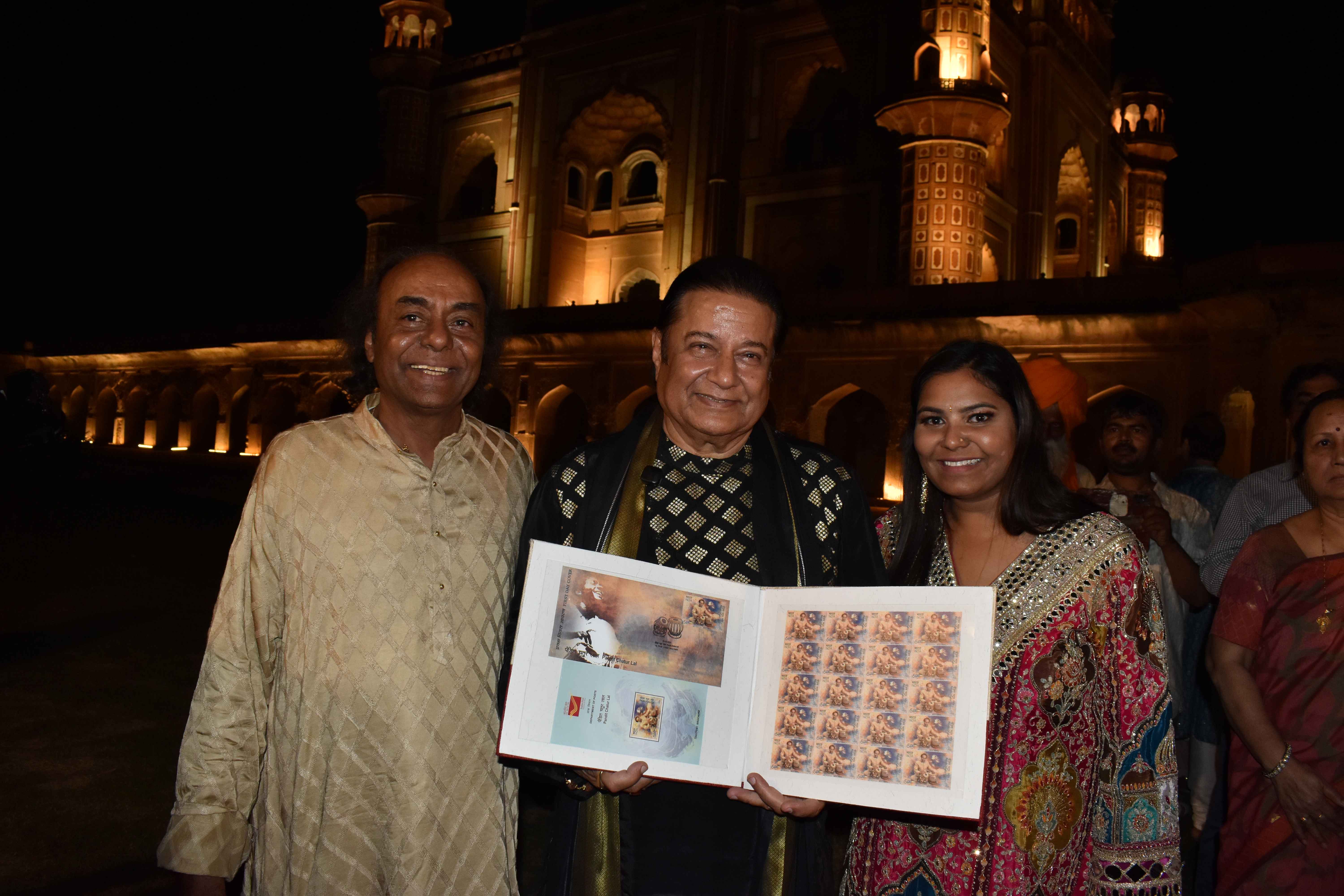
The centrepiece of the evening was Brahmaand — a contemporary yet deeply rooted musical offering conceived and presented by Pranshu Chatur Lal, the grandson of Pandit Chatur Lal, as an intimate dialogue between tradition and the present
 TDJ News Service
19 Apr, 2026
New Delhi: Under the ancient stone arches of Safdarjung Tomb, time seemed to pause. Thousands of music lovers, classical art enthusiasts, and admirers of India's percussive heritage gathered at one of New Delhi's most storied heritage sites to witness a landmark cultural event — the Pandit Chatur Lal Centenary Festival.
Presented by the Pandit Chatur Lal Memorial Society in collaboration with Delhi Tourism, and organised under the guidance of Meeta Chatur Lal and Charanjit Chatur Lal, with curation by Shruti Chatur Lal, the evening marked the 100th birth anniversary of the legendary tabla maestro who first carried the heartbeat of Indian rhythm to the world. What unfolded over the course of the evening was more than a musical event.
It was an act of collective remembrance, a city pausing to honour a genius who, six decades after his passing, continues to shape the way the world hears Indian classical percussion. The stature of the evening was further elevated by the presence of distinguished dignitaries from across India and the international community, including renowned singer Daler Mehndi, Rasmus Abildgaard Kristensen, Ambassador of Denmark, Keiichi Ono, Ambassador of Japan, eminent classical dancer Sonal Mansingh, Maharani Sahiba Nivritti Kumari Mewar of Udaipur, and Baijilal Sahiba Praneshwari Kumari Mewar of Udaipur.
Their presence added immense prestige to the celebration and underscored the global resonance of Pandit Chatur Lal’s legacy, bringing together cultural leaders and connoisseurs in a shared tribute to Indian classical music. The sprawling lawns of Safdarjung Tomb drew an audience of over 2000 people, from seasoned classical music enthusiasts who remember Pandit Chatur Lal's recordings to young listeners encountering his legacy for the first time.
The atmosphere was one of rare intimacy for such a large gathering — hushed during the most delicate musical passages, electric during the moments of rhythmic brilliance, and deeply moved during the evening's most personal and reflective moments. The evening opened with a performance by Bhajan Samrat Anup Jalota, whose voice has defined devotional music for generations of Indian listeners. Dressed in characteristic simplicity, Jalota took the stage and immediately transformed the atmosphere of Safdarjung Tomb, absorbing the warmth of bhajans that felt both timeless and entirely of this moment.
His set moved through compositions that spanned the full emotional register of devotional music — from the tender and personal to the celebratory and communal. When Jalota closed his set, the applause that followed was long, warm, and entirely deserved — a fitting opening tribute to a centenary evening dedicated to the spirit of a man who gave his life to making music a bridge between cultures.
The centrepiece of the evening was Brahmaand — a contemporary yet deeply rooted musical offering conceived and presented by Pranshu Chatur Lal, the grandson of Pandit Chatur Lal, as an intimate dialogue between tradition and the present. The performance brought together a stellar ensemble of artists — Saqib Khan on Sitar, Shuheb Hasan on Vocals, Atul Shankar on Flute, and Monis Ali on Keyboards — each contributing a distinct voice to a collective composition that felt both rigorously classical and expansively imaginative.
From the first notes of Saqib Khan's sitar, it was clear that Brahmaand was not a performance in the conventional sense. It was a sonic landscape, built slowly and with great care, in which each instrument found its place in relation to the others rather than competing for the foreground. Shuheb Hasan's vocals threaded through the ensemble with a quality that felt almost architectural, his voice a structural element of the composition as much as an expressive one. Atul Shankar's flute brought moments of extraordinary lightness, passages where the music seemed to lift entirely from the ground, evoking the vastness the composition's name suggests.
Monis Ali's keyboards provided a contemporary harmonic foundation without ever displacing the classical sensibility at the piece's core — a balance that spoke to the precision of Pranshu Chatur Lal's compositional vision. At its heart, Brahmaand was a tribute, a grandson's conversation with a grandfather across time, mediated by the universal language of rhythm and sound.
The audience felt every dimension of it. By the time the ensemble reached its final passages, the lawns of Safdarjung Tomb had become something rarer than a concert venue — they had become a shared space of memory, inheritance, and possibility.
Shruti Chatur Lal, Curator, Pandit Chatur Lal Centenary Festival said, "Tonight was everything we hoped it would be — and more. To see thousands of people gathered at Safdarjung Tomb, united by a love for Pandit Chatur Lal ji's music and legacy, is a moment none of us will forget. This centenary edition has proven that his rhythm is not confined to recordings or history books — it lives, it moves, and it continues to inspire. We are deeply grateful to Delhi Tourism, our artists, and every member of the audience who made this evening what it was."
Pandit Chatur Lal died on October 14, 1965, a loss that Indian classical music felt deeply and felt long. But Wednesday evening at Safdarjung Tomb offered something that transcended mourning: it offered the joyful, living proof that a great artist never truly departs. The Pandit Chatur Lal Memorial Society, guided by Meeta Chatur Lal and Charanjit Chatur Lal and now marking 49 years of committed service, ensured that this centenary was not merely commemorated — it was celebrated. One night. One legacy. A hundred years of rhythm.
Tags : Anup Jalota, Indian Classical Music, Chatur Lal, Sonal Mansingh, Maharani Sahiba Nivritti Kumari Mewar