Events & Updates
Amir Khusrau’s enduring legacy highlighted at Ghalib Institute Lecture
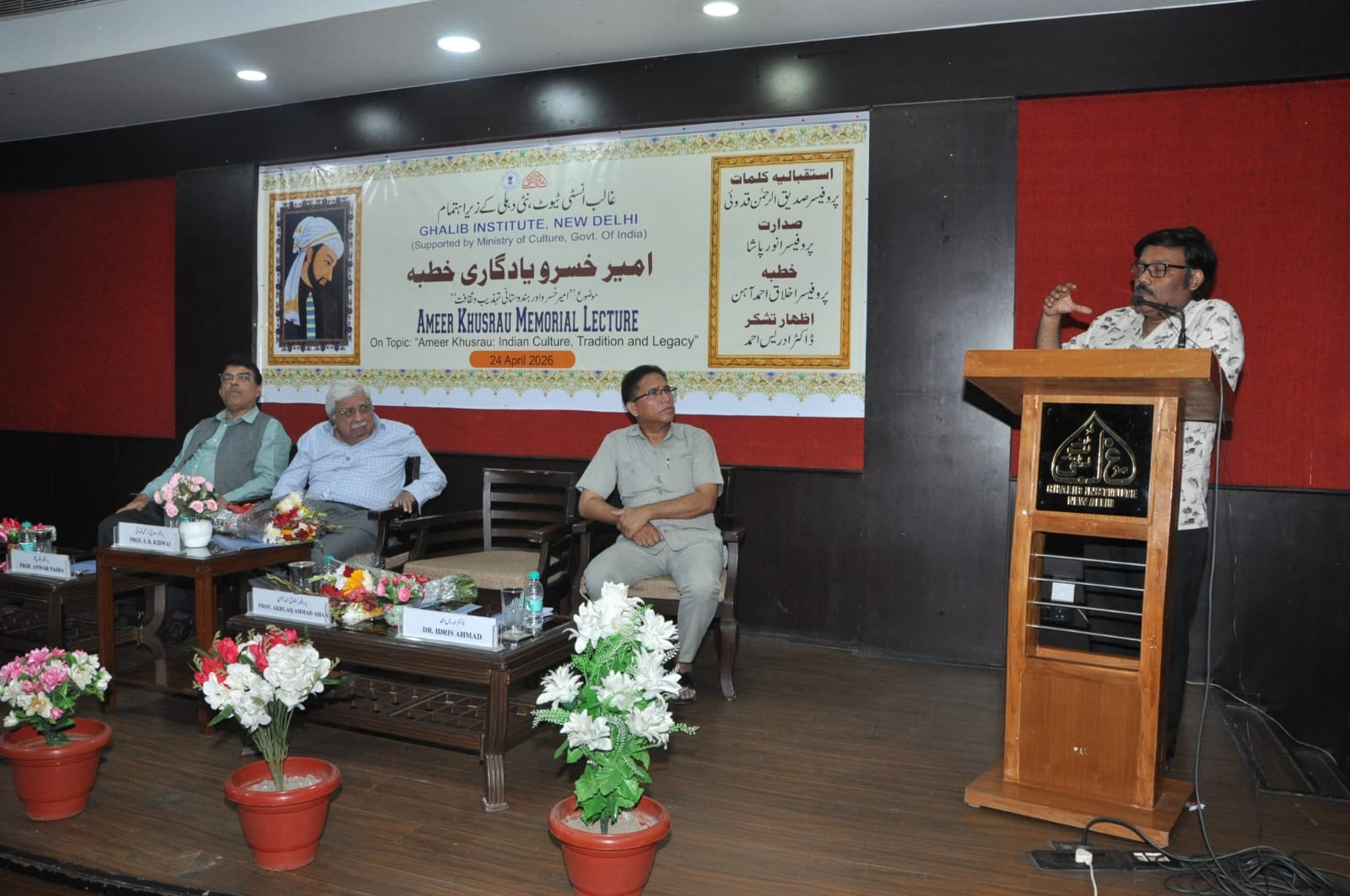
Opening with reflections on Amir Khusrau’s vast literary contributions, Professor Akhlaq Ahan led a memorial lecture at Ghalib Institute, underscoring the poet’s unmatched legacy and the continued need to engage future generations with India’s rich intellectual and cultural traditions
 TDJ News Service
25 Apr, 2026
New Delhi: “When I look at Amir Khusrau’s literary legacy, it becomes difficult to decide which of his works to prioritise,” said Professor Akhlaq Ahan while delivering a lecture titled “Amir Khusrau and Indian Civilization and Culture.”
He noted that Khusrau left behind unparalleled prose works such as “Ijaz Khusrau,” “Khazain-e-Futuh,” and “Afzal-e-Fawaid,” while also revitalising poetic traditions with masterpieces like the masnavi “Nuh-Sepehr.” Describing it as unmatched in Indian literature, he highlighted the third chapter of “Nuh-Sepehr,” which focuses on India, as particularly remarkable. He also emphasised the need to educate future generations in a way that connects them to their intellectual heritage while meeting contemporary demands.
The lecture was part of a memorial sermon on Amir Khusrau organised by the Ghalib Institute. In his welcome address, the institute’s secretary, Professor Siddiqur Rahman Kidwai, said the event has been held for many years, yet each discussion on Khusro continues to leave a sense of incompleteness. He attributed this to Khusrau’s multifaceted personality, noting that many aspects of his life and work are still not fully understood.
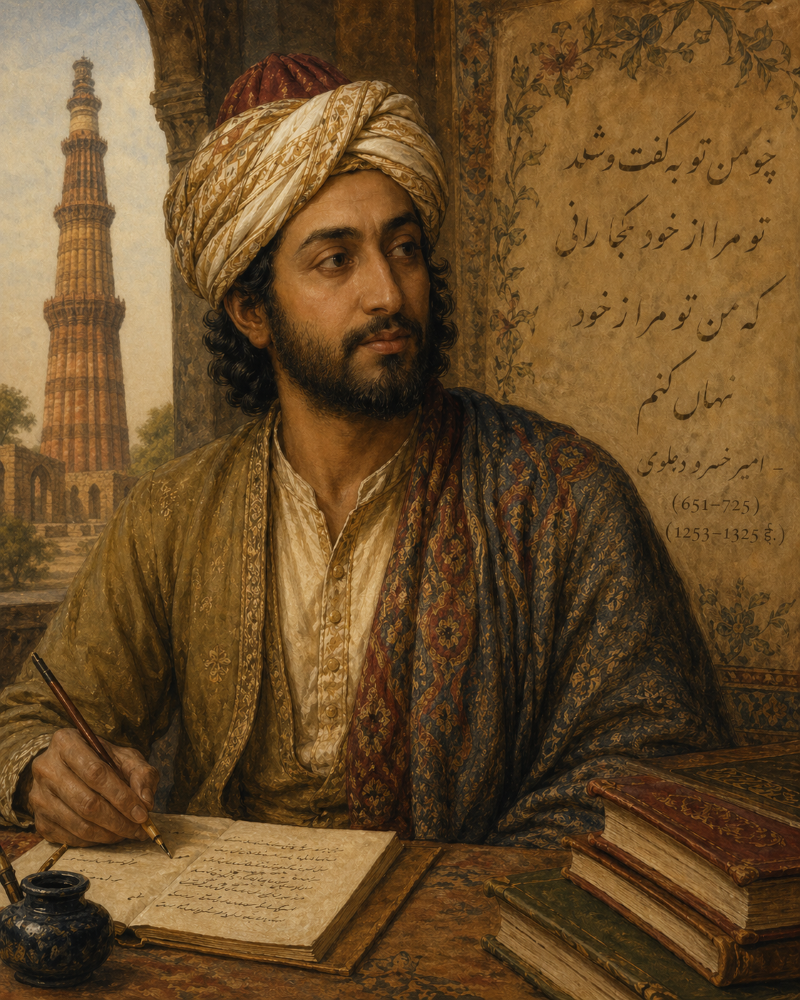
Amir Khusrau was a poet who lived in Delhi during the late 13th and early 14th century (AI generated image)
The session was presided over by noted writer and critic Professor Anwar Pasha, who described Amir Khusro as a comprehensive and versatile figure with extraordinary contributions to poetry, music, and other fields. He added that Khusrau’s artistic excellence was recognised even by Iranian poets.
Professor Pasha further observed that despite serving in the courts of seven rulers, Khusrau produced an extraordinary body of work, including five diwans, ten masnavis, and three prose books—remarkable both in quantity and quality.
Ghalib Institute Director Dr. Idrees Ahmed said the institution remains committed to promoting Urdu and continues to organise the Amir Khusro memorial sermon annually, inviting distinguished scholars each year. He noted that Professor Akhlaq Ahan was invited for his deep engagement with Urdu-Persian poetry, which is essential for a meaningful discussion on Khusrau.
Khusrau is credited with the establishment of the language that is the mother of Urdu and Hindi.
Tags : Amir Khusrau, Amir Khusro, Poetry, Indian Civilisation, Delhi, Poetry, Persian