Business
UFSEC 2026 wraps up with strong push for safer workplaces
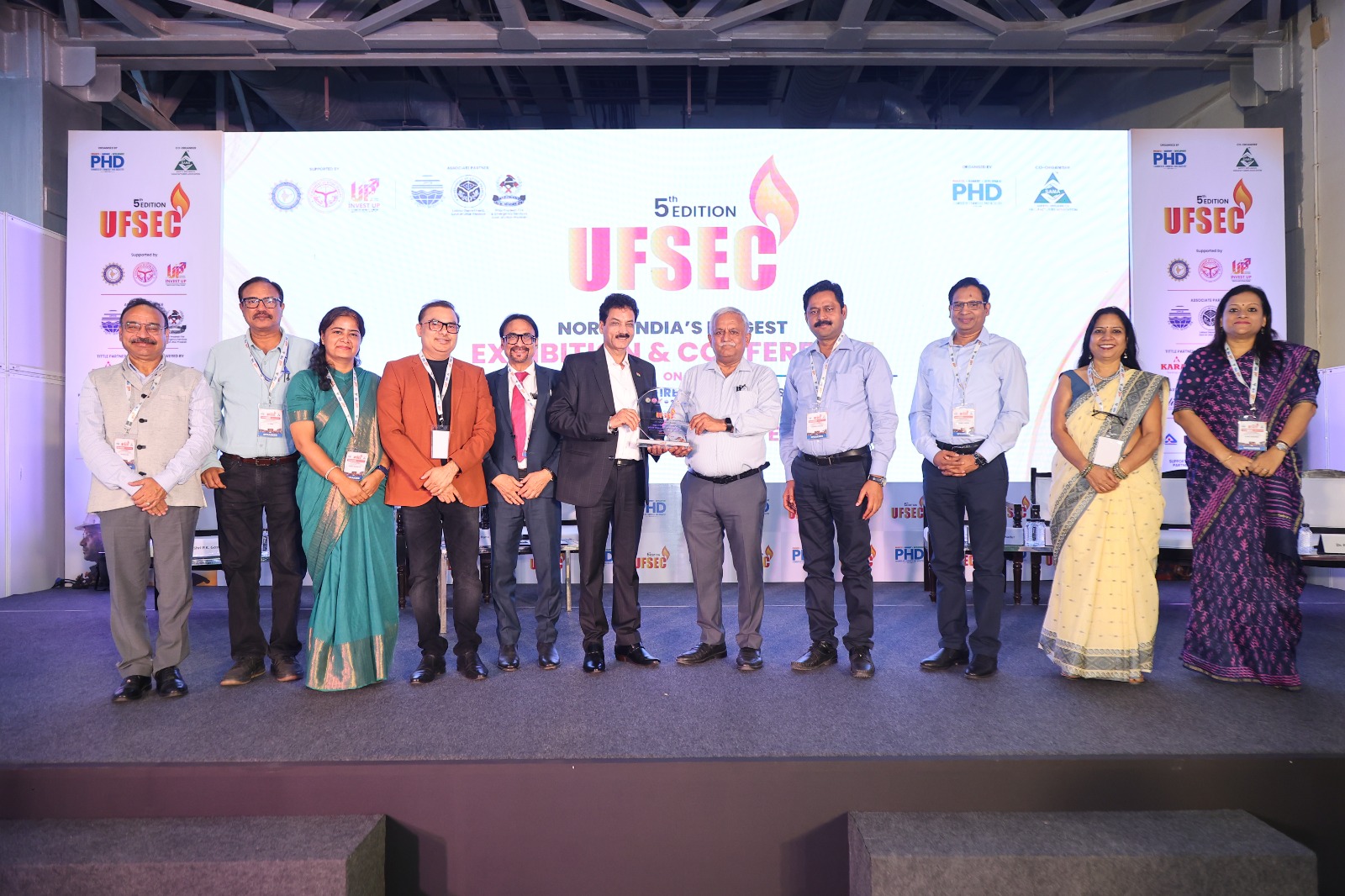
On the second day, a series of technical sessions were held, encouraging policymakers, emergency response specialists, fire protection experts, business executives, and technology experts to discuss modern safety frameworks, disaster preparedness, and workplace safety reforms
 TDJ News Service
11 Jul, 2026
New Delhi/Greater Noida: The fifth edition of UFSEC 2026, North India's largest exhibition and conference on industrial safety (HSE), fire safety and disaster response, concluded successfully at the India Expo Centre & Mart in Greater Noida. Organised by the PHD Chamber of Commerce & Industry in association with the Safety Appliances Manufacturers Association (SAMA), the two-day event brought together policymakers, industry leaders and safety experts to advance workplace safety and emergency preparedness.
The event was supported by the National Disaster Management Authority (NDMA), Directorate of Industrial Safety & Health (DISH), Government of NCT of Delhi, the Labour Department and Fire & Emergency Services of the Government of Uttar Pradesh, the Uttar Pradesh Pollution Control Board, and Invest UP under the Uttar Pradesh Government's Industry Department.
On the second day, a series of technical sessions were held, encouraging policymakers, emergency response specialists, fire protection experts, business executives, and technology experts to discuss modern safety frameworks, disaster preparedness, and workplace safety reforms.
The day commenced with the first technical session, 'Latest OSH Code Updates: Key Highlights, Implementation Challenges, Emergency Preparedness & the Way Forward'.
A notable guest speaker at the event was Awanish Awasthi, IAS (Retd), Advisor to the Honourable Chief Minister of Uttar Pradesh.
In his address, he said, "Industrial growth must be accompanied by a strong culture of safety, preparedness and innovation. As Uttar Pradesh strengthens its industrial ecosystem, modern technologies and best practices showcased at forums like these should be translated into actionable outcomes."
He further suggested to the PHDCCI "that a comprehensive catalogue of the products, technologies and services exhibited by participating companies should be prepared and presented to the appropriate government authorities to facilitate informed decision-making and encourage wider adoption of proven safety solutions across industries".
The session was chaired by PK Goswami, Deputy Director, (ISH), Labour Department, Govt of NCT of Delhi and Devendera Gill, Executive Director, Safety, DMRC.
Pushpa Dhoundiyal, Deputy Labour Commissioner, Government of NCT of Delhi, said, "The Occupational Safety, Health and Working Conditions (OSH) Code simplifies compliance while strengthening worker welfare through digital governance, single-window registrations, mandatory appointment letters and enhanced social security. Its success, however, will depend on effective implementation and active collaboration among employers, workers and regulatory authorities."
SP Rana, Director, Directorate of Industrial Safety & Health (DISH), Government of NCT of Delhi, said, "The Occupational Safety, Health and Working Conditions Code marks a shift towards a proactive and compliance-driven regulatory framework. By promoting digital governance, self-certification and greater accountability, it seeks to improve workplace safety while supporting ease of doing business and stronger worker protection."
Florence Almeida, Former Medical Inspector of Factories & Certifying Surgeon, said, "Occupational safety is not limited to accident prevention but also includes protecting workers from occupational diseases. The OSH Code promotes preventive healthcare through mandatory health screenings, improved workplace sanitation and better working conditions, helping organisations safeguard employee well-being and long-term productivity."
Mukta Girdhar, Senior Consultant, Delhi Disaster Management Authority, said, "Disaster preparedness is a shared responsibility that extends beyond government agencies. While technology and integrated emergency response systems have strengthened disaster management, greater public awareness, preparedness and timely action remain essential to protecting lives and building resilient communities."
Surendra Bahadur, Assistant Director of Factories, Ghaziabad, Government of Uttar Pradesh, said, "The OSH Code marks a significant shift from prosecution-based regulation to a compliance-driven approach. By strengthening employer responsibilities through enhanced safety standards, mandatory documentation, health monitoring and welfare measures, it aims to foster safer workplaces through proactive compliance and accountability."
Second session
The second technical session was 'Modern Strategies in Urban Fire & Life Safety during Construction of High-rise Buildings, Occupation and Crisis’, chaired by Shri RC Sharma, Former Director, Delhi Fire Services and SK Tomar, Chief Fire Officer, Delhi Fire Services.
Ashish Sarangi, Lead Associate Technical Head, KARAM Safety, said, "Fire safety begins long before an emergency occurs. Awareness, regular training and the adoption of practical engineering solutions are the three pillars of effective emergency preparedness. Investing in evacuation systems and building a culture of readiness can significantly reduce casualties and help save lives during disasters."
Mayur Tiware, Founder, Fireescape Engineering Pvt. Ltd, said, "As urban skylines continue to grow vertically, fire safety infrastructure must evolve accordingly. Advanced rescue ladders, compressed air foam systems and modern firefighting technologies can significantly enhance emergency response capabilities, while regular training and reliable after-sales support remain essential for effective fire preparedness."
Arun Kohli, CEO, Alankar Speciality Cables Pvt. Ltd, said, "As cities expand vertically, fire safety systems must evolve beyond conventional solutions. Early fire detection, fire-survival cabling and resilient life-safety infrastructure are essential to ensuring timely evacuation, protecting critical emergency systems and making high-rise buildings safer for occupants and first responders alike."
Rohan Bhargava, Partner, Alaknanda Systems, said, "Fire safety in high-rise buildings must begin at the construction stage through strict compliance, certified materials and integrated planning. Combining early detection, advanced suppression systems, smoke management, evacuation strategies and emerging technologies such as drones will significantly strengthen urban fire resilience and emergency response capabilities."
Anurag Sharma, General Manager, Y-Access Manufacturing, said, "Fire safety begins with ensuring the safety of those who build and maintain critical infrastructure. Providing reliable access equipment, fire-resistant materials and safe working-at-height solutions enables workers to perform their tasks securely, with the ultimate goal of ensuring everyone returns home safely after every workday."
Raju Kalra, Hawksvale, UK, said, "Artificial intelligence is transforming workplace safety by shifting organisations from reactive incident management to predictive risk prevention. AI-powered drones, wearable devices, real-time monitoring and immersive training solutions enable faster hazard detection, informed decision-making and safer workplaces, significantly reducing accidents and strengthening operational resilience."
The conference concluded with the third technical session, 'Technology-Enabled Disaster Response & Crisis Coordination.'
Amit Tuteja, United Nations Development Programme (UNDP), said, "With India increasingly vulnerable to natural disasters, industries must move beyond reactive measures to proactive resilience. Leveraging early warning systems, digital alert platforms, disaster preparedness planning and coordinated response mechanisms will be essential to protecting lives, minimising economic losses and ensuring business continuity during emergencies."
Somdev Singh said, "Emergency response systems must evolve through the integration of IoT, intelligent sensors and unified command platforms. Technology-driven emergency operation centres can enable real-time monitoring, faster incident response and seamless coordination among multiple stakeholders, significantly improving preparedness and reducing the impact of disasters."
Milind Raj, Scientist, Technology Expert & Researcher, CTO – Monda Tech Solutions, said, "India has the talent and technology to transform emergency response through advanced drones, robotics and AI-driven systems. The need now is to move beyond innovation to large-scale implementation by fostering stronger collaboration between government, industry and researchers, enabling faster rescue operations and saving lives during disasters."
Mukta Girdhar said, "Climate change is making heatwaves more frequent and severe, demanding proactive urban resilience measures. Delhi's Heat Action Plan 2026 focuses on protecting vulnerable communities through early warning systems, thermal cooling points, mobile health response units and coordinated government interventions to minimise heat-related health risks and save lives."
The two-day gathering honoured the collaborators and exhibitors, including Jubilant Ingrevia Limited, Gajraula Plant; NTPC Limited, Dadri; Intercorp Biotech Private Limited; LG Electronics India Limited; Indianoil Skytanking Private Limited; and Swati Menthol and Allied Chemicals Limited, by providing them with the ‘Recognition of Excellence’ award for adopting and demonstrating best HSE practises. The event established itself as one of the premier platforms in India, aimed at popularising a safer and more sustainable industrial environment.
The conference was supported by leading industry partners, including KARAM FireEscape, Radico, Zoloto Valves, Alankar Speciality Cables Pvt. Ltd., Bureau of Indian Standards (BIS), Heapro, Indorama India Pvt. Ltd., National Safety Council of India and the Natural Gas Society, and King Expo Media. With extensive participation from government bodies, industry leaders and technology providers, UFSEC 2026 successfully reinforced its position as one of India's premier platforms for advancing industrial safety, fire safety and disaster resilience through collaboration, innovation and knowledge exchange.
Tags : Disaster management, industrial safety, Uttar Pradesh, Greater Noida, NDMA