Profiles & History
When Delhi used to wallop J&K in Ranji Trophy
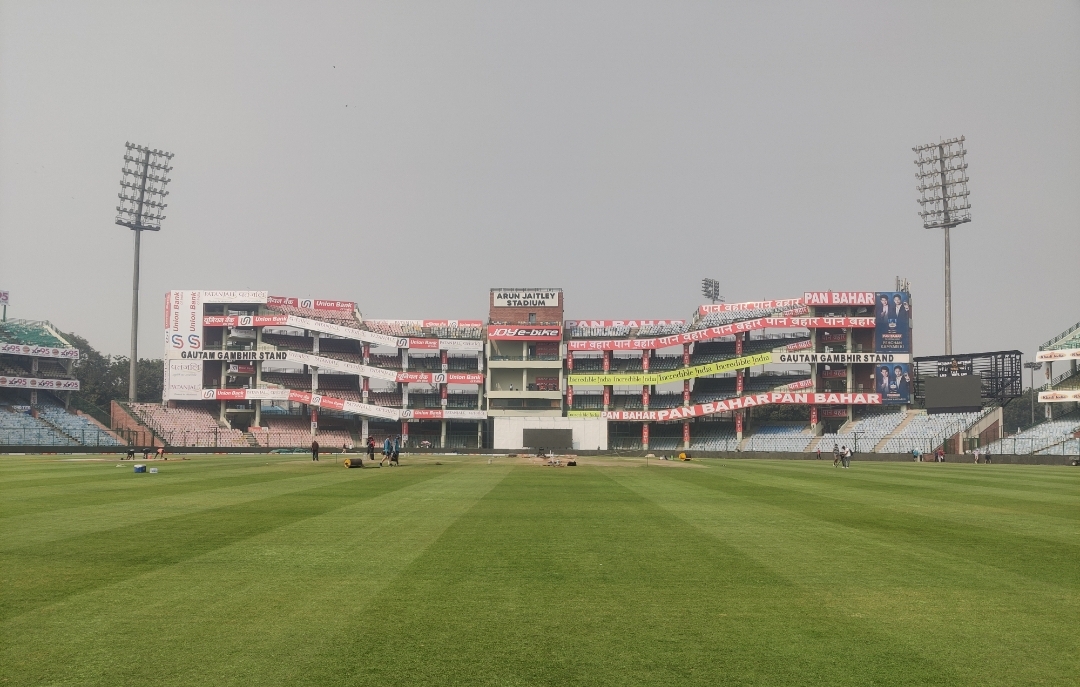
J&K beat Delhi for the first time in 65 years in Ranji Trophy but there was a time when Delhi would feel 150-plus and 250-plus totals were enough to clinch an innings win and find time to travel and shop
 Khurram Habib
A sports journalist for 23 years now, having written extensively on cricket, golf, Formula One among other sports. Have also manned desks, sports and otherwise.
13 Nov, 2025
New Delhi: As the news of humiliating loss to Jammu and Kashmir (J&K) at the Ferozeshah Kotla ground spread through Delhi’s cricketing circles, players from yesteryear recalled the times they would dominate and pulverise India’s northern-most state.
The 1959-60 season was the inaugural season for J&K and it was expected that Delhi would sweep away the newbies. Delhi won by an innings and 100 runs even after scoring just 251/4 (declared) in the first innings.
The match played in Delhi lasted for just 112.1 overs and would have ended on the morning of Day 2.
Medium-pacer Sitaram who used to bowl gentle inswingers and later wrist-spin with the old ball took 7/26 in the first innings as J&K were dismissed for just 72 in 35.3 overs. After Delhi had made 251/4 before declaring thanks to contributions Prakash Bhandari (89) and V Balaji Rao (84), Delhi dismissed J&K for just 46 in 22 overs. Sitaram took 5/18 while Rajinder Pal picked 5/26. Sitaram ended with a match haul of 12 wickets.
The next season, in 1960-61, saw Delhi visit Srinagar.
“The matches were played on matting pitches there. There was rain prior to the match and the weather did not look good during the days of the match. We sort of hurried through,” recalls Anil Jain, who was part of that squad but did not play.
This match took place about nine months after the previous one in Delhi.
Ramesh Diwan (150 not out) and Prem Bhatia (102) scored centuries, both products of St Stephen’s College, Delhi University and lived in Kamla Nagar. Gulshan Rai, a right-hander who was product of Hindu College and lived in South Extension, hit 82 as Delhi ended with 385/3 declared in 82 overs. Rai had captained Delhi in the previous duel with J&K.
Delhi then shot J&K out for 23 with pace bowler and captain Rajinder Pal taking 6/3 and Sitaram picking 4/19.
J&K followed on and did a shade better, making 28 with Sitaram taking 7/11 and Rajinder Pal 3/17. This was Sitaram’s second uccessive 10-wicket haul against J&K.
This is the match that Anil Jain recalls ended on the first day itself.
“There was no or very little play on Day 2 if I can recall correctly. You won’t believe that after the match ended, it rained incessantly. For the 3-4 days we were there, it kept raining.”
The 1961-62 season saw the entry of MAK Pataudi, also known as Nawab of Pataudi Jr. He played that game under the captaincy of fast bowler Rajinder Pal.
J&K were dismissed for 47 with Gyaneshwar Prasad of Ramjas College taking 9/34 with his part-time off-spin.
“He was a batsman who could bowl off-spin,” says Jain.
Delhi scored 435/9 declared at the Kotla with Gokul Inder Dev scoring 102 not out batting at No. 9. Inder Dev, who worked in defence, played 93 first-class matches representing four teams – Delhi, Eastern Punjab, Northern Punjab and Services.
Nawab of Pataudi Jr made 51 while right-handed batsman SK Sharma hit 85. Sharma, an architect by profession, was a good friend of Pataudi.
Delhi then dismissed J&K for 94 in under 25 overs.
KK Tiwari, a left-arm spinner who played for MCD usually at the Corporation Ground near Red Fort, picked 5/32.
The 1962-63 match was played in Srinagar and one can say it was more closely fought game than the previous ones.
Delhi, under the captaincy of wicketkeeper Anil Khanna, were bowled out for 186 with Ramesh Saxena scoring 51. Delhi dismissed J&K for 111 with Rajinder Pal taking 5/52.
Delhi declared second innings at 151 for seven, setting J&K a target of 227.
Inder Dev took 5/23 while Gyaneshwar took three as J&K were shot out for 82.
The 1963-64 match between the two played at Delhi’s Ferozeshah Kotla in November, 1963 was one that finished almost in a day. Those who recall that game say, the teams had to return for just one ball.
J&K batted first and were all out for 67 with off-spinner Vijay Sondhi taking 5/26 and left-arm spinner Rajinder Goel taking 4/15.
Delhi made 156/2 declared. Since the pitch was damp, Delhi thought it would be enough. Opener Akash Lal scored 78 not out while Ramesh Saxena made 39 not out.
“It was a damp pitch. There were no covers those days. Vijay Sondhi’s off-spinners were practically going at right angles. They were very unplayable. He was fastish off-spinner. He would hit the wicket without much flight,” recalls the 85-year-old Akash Lal, whose nephew Arun Lal played for India.
“Rajinder Goel was a master spinner and on a spin-friendly pitch, he would turn square and be unplayable. I’d say he was a better spinner than Bishan Bedi on turners but Bedi scored over him on flatter surfaces. Bedi delivered great flight and had a sharp armer that would rush back in. That is why he was picked for India and played for so long.”
A first innings lead of 89 isn’t a great one. But in that game, it proved more than enough as J&K were dismissed for 38. Vijay Sondhi picked 8/14 in second innings for a match haul of 13 wickets.
Delhi won by an innings and 51 runs.
The tilt towards Delhi remained the same through the 1970s. In the 1976-77 season, Delhi declared after making 244/3 and still won by an innings and 32 runs.
Kirti Azad, member of the 1983 World Cup-winning team, recalls the match.
“Viney Lamba was the captain. The top players of our side were busy probably on national duty. We finished the match well before the end of Day 2 and hired taxies to go to Pahalgam. We had time – about half a day on Day 2 and the entire Day 3. We went for shopping and got beautiful writing desks made of walnut wood,” he recalls.
Azad says that J&K have improved but is concerned over declining standard of Delhi cricket. Prior to this loss, Delhi had also lost humiliatingly to Pondicherry the season before last.
The story was one-sided again in the 1977-78 season when in Delhi, Delhi made 430/3 declared. Skipper Viney Lamba made 160, Venkat Sunderam, who opened with Lamba, hit 101 and Rakesh Shukla, who played a Test, hit 100 not out. J&K were bowled out for 98 and 173 losing by innings and 159 runs.
In 1978-79, at Jammu, Delhi made just 292 for eight declared and dismissed J&K for 85 and 96 to win by an innings and 111 runs.
The stories have remained the same before J&K turned it around this week to notch their first win over Delhi in 65 years.
Vijay Dahiya, former India international who has represented Delhi through 1990s and 2000s, and also witnessed Delhi’s domination over Jammu and Kashmir says of the time he played, “J&K’s bowling was always good but now their fielding and batting has improved.”
You only had to see Vivrant Sharma’s diving catch at square leg to dismiss Ayush Badoni on Day 3, watch Qamran Iqbal’s fluent and stroke-filled ton on Day 4 and witness well-crafted knocks by Paras Dogra and Abdul Samad on Day 2 to understand what Dahiya is talking about.
Tags : Ranji Trophy, Kirti Azad, Jammu, Kashmir, Paras Dogra, Abdul Samad, cricket